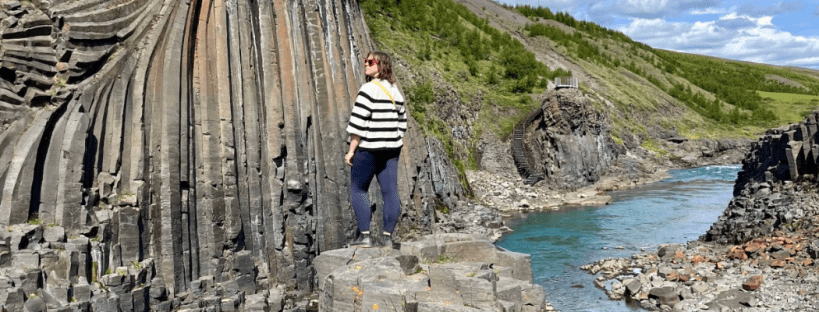
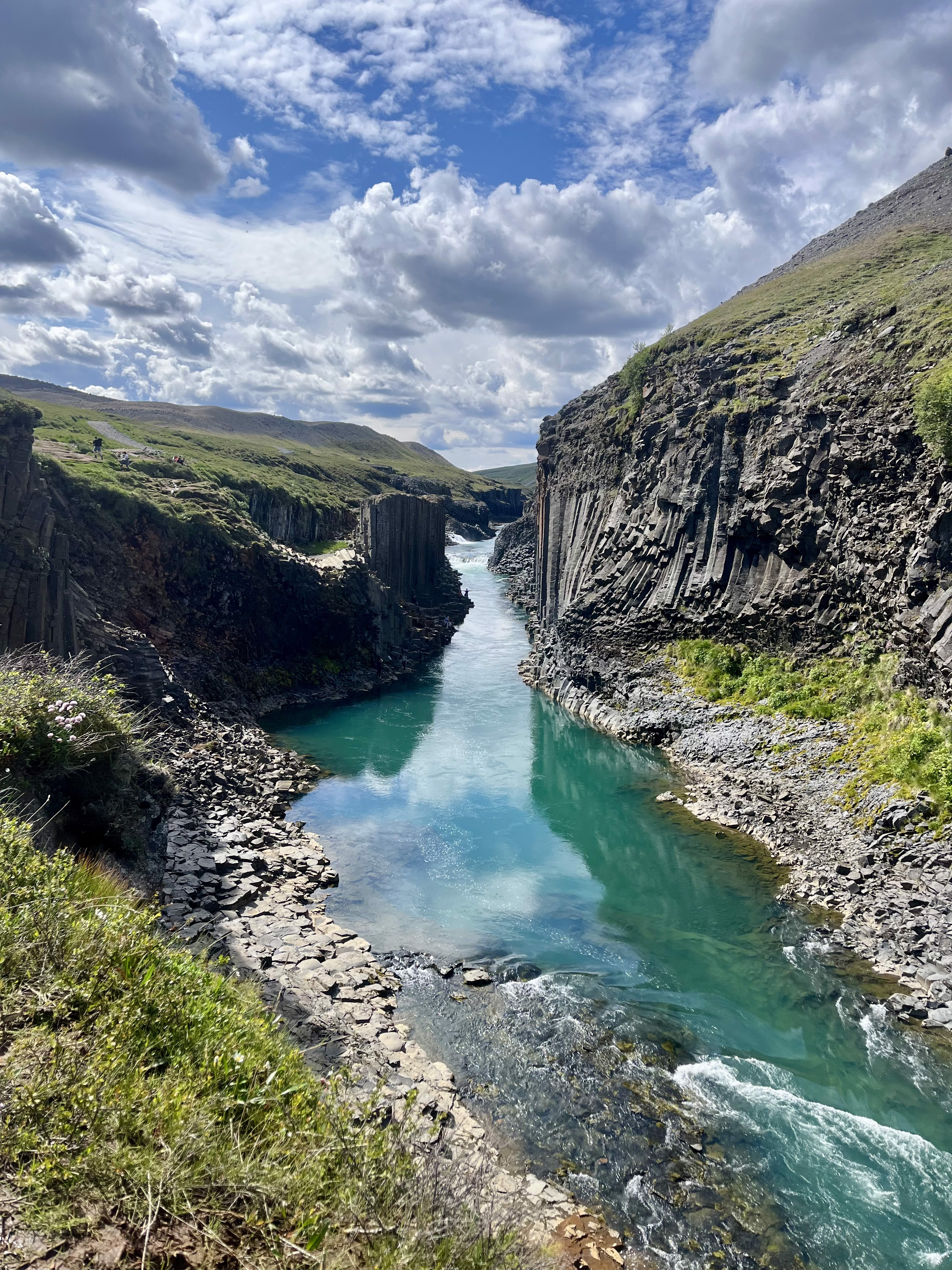
If you’re planning a trip to Iceland and want to tackle an easygoing hike with one-of-a-kind views, Stuðlagil Canyon is the perfect option. This picturesque outdoor area is renowned for its stunning rock formations and crystal-clear blue waters. The canyon consists of basalt rock columns that form unique hexagonal shapes around a river called the Jökulsá á Dal (or Jökulsá á Brú). As a result, Stuðlagil Canyon has an almost otherworldly appearance, making it a popular stop for travelers to Iceland.
This Iceland hiking guide for Stuðlagil Canyon has everything you need to know about hiking to this iconic Icelandic landmark!
Stuðlagil Canyon Hike
Stuðlagil Canyon Facilities + Parking
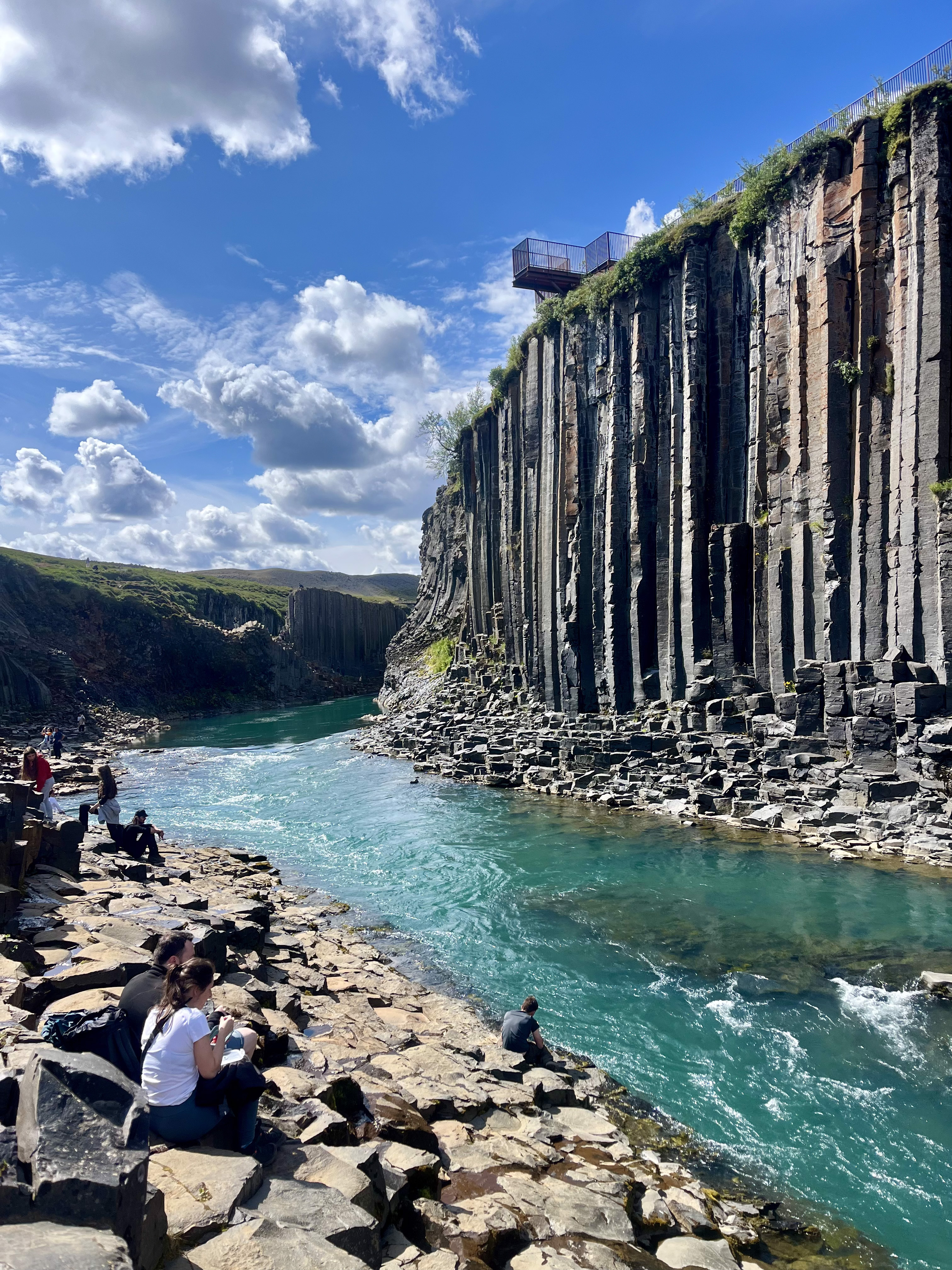
Stuðlagil Canyon is located in eastern Iceland’s Jökuldalur Valley, which translates to Glacier Valley. From Egilsstaðir, the largest town in East Iceland, the drive to the canyon is about an hour. While you can explore both sides of Stuðlagil Canyon, the eastern side offers better views and the chance to hike down to the water. From the western side, you can only see the canyon via some small observation platforms.
Pro tip: Stuðlagil Canyon is located off Road 923. Since the road is gravel, driving to the canyon can get bumpy, but it’s manageable in a 2WD vehicle when conditions are dry. 4WD is recommended if you’ll be driving in rain or snow.
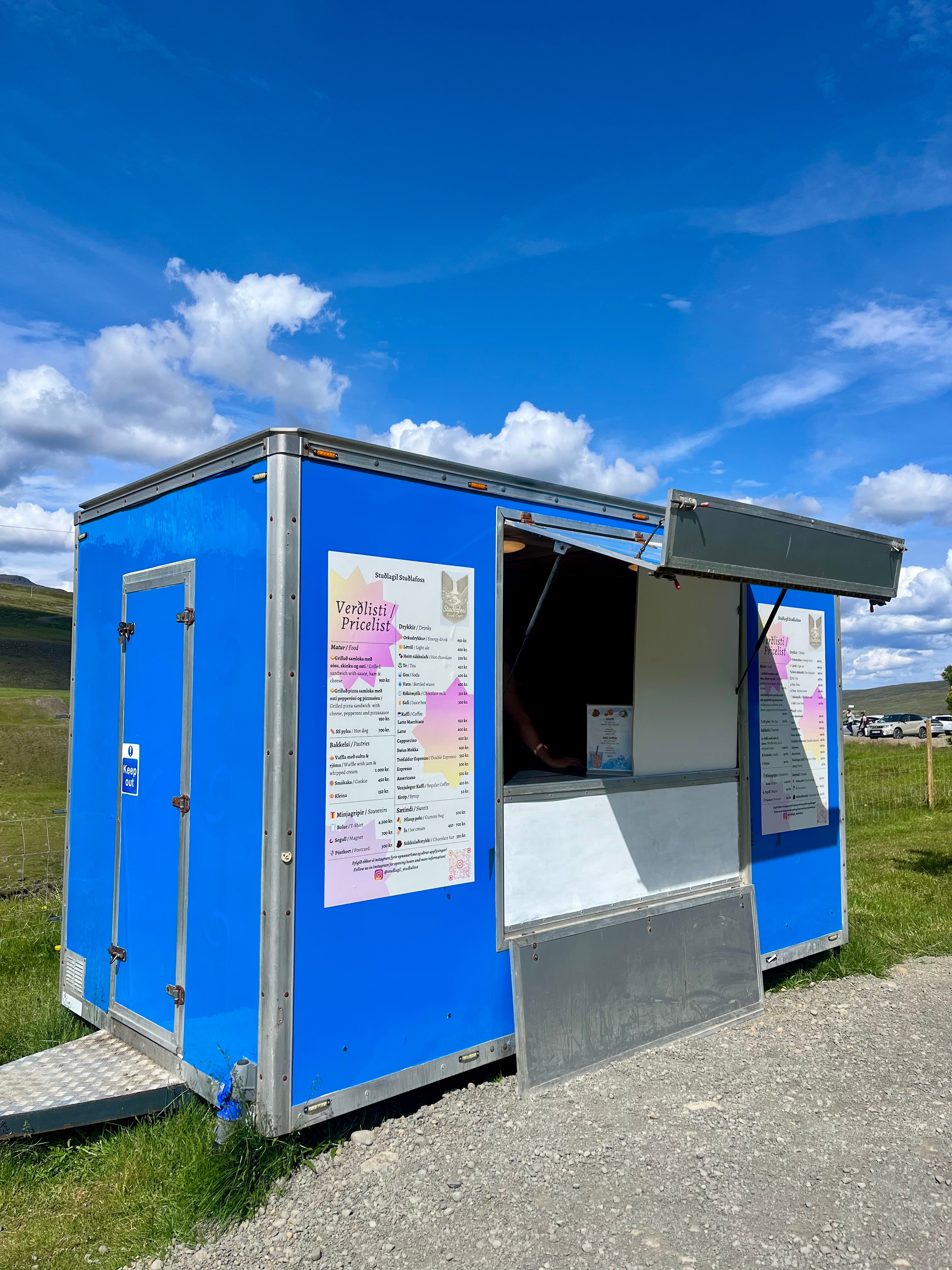
If you have limited time, the west side is preferable because parking is free (there’s a small fee to use the restrooms) and the walk to the canyon viewpoint is relatively short. The east side of the canyon features two parking lots—the first/furthest one is free, while the second/closer one is 1000 ISK (~$8) and has restrooms. During the summer months, a food truck sets up at the paid lot on the east side offering beverages, baked treats, and quick café-style bites.
Pro tip: I suggest parking in the second/paid lot on the east side to save time, because it cuts around 3 miles off the total hiking distance.
Hiking to Stuðlagil Canyon
From the paid lot on the east side of Stuðlagil Canyon, the hike is about three miles total. The trail follows a relatively flat gravel path through quaint farm land. Along the way, you’ll pass Stuðlafoss, a beautiful waterfall boasting those famous rock columns. Don’t forget to keep an eye out for sheep!
After about a mile and a half of leisurely walking, you’ll reach the edge of the canyon. The views from above are spectacular, but I highly recommend hiking down into the canyon as well. Doing so will let you get up close and personal with the striking rock formations and vibrant blue water. My husband, Solomon, and I had a lot of fun wandering around the rocky river banks and admiring the serene landscape.
Pro tip: Early summer is the best time to see the river’s signature turquoise color. In late summer and fall, the water becomes murky and brown.
Stuðlagil Canyon Final Thoughts
Definitely check out Stuðlagil Canyon if you already plan to be in the East Iceland region. The hike located on the east side is short and beginner-friendly, but it will reward you with jaw-dropping views. Take the time to trek down into the canyon, and bring some snacks to enjoy along the river’s edge. If you’re pressed for time or don’t care to hike, the canyon’s western side is a great alternative for a quick stop.
With fall in full swing and spooky season right around the corner, there’s no better time to embark on some creepy Georgia hikes. Georgia boasts many exceptional trails that are best enjoyed when the air is crisp and the leaves are changing colors. From a remote island with centuries-old ruins to iconic peaks harboring horrific backstories, these are the most creepy Georgia hikes to tackle this fall.
1. Blood Mountain
The name alone makes Blood Mountain a must-visit destination this October. As the tallest peak on the Georgia section of the Appalachian Trail, Blood Mountain is an excellent adventure for both long-distance backpackers and day-trippers. There are several routes to the summit, but the 4-mile-long trek along the Byron Reece Trail is one of the most popular.
According to Cherokee mythology, the mountain was once home to Nunnehi, or spirit people. Some claim Blood Mountain earned its name from a 1700s-era battle between the Cherokee and Muscogee (Creek) Nations. Others, meanwhile, attribute it to the red lichen that grows atop the summit.
2. Raven Cliff Falls
For ultimate spooky vibes, tackle the hike to Raven Cliff Falls. The almost 5-mile-long trail is relatively moderate, with just a little over 600′ of elevation gain, making it a top choice during summer. However, I think Raven Cliff Falls shines in the fall, when conditions are rainy and overcast.
You’ll have to take extra care watching your steps to ensure you don’t slip on the mud or rocks, but the effort is well worth it. Raven Cliff Falls is a gorgeous spot to bundle up and spend a chilly afternoon.
3. Springer Mountain
Springer Mountain is one of Georgia’s most prolific hikes, thanks to its status as the southern terminus of the Appalachian Trail. Most hikers reach the summit via the 8-mile-long Appalachian Approach Trail, which begins at Amicalola Falls. Camping at Springer Mountain is an essential trip for any Georgia-based hiker or backpacker. If you tackle it during fall or winter, you’ll likely be treated to an eerie atmosphere when mist and frost cover the summit in the early morning hours.
4. Cumberland Island
In my opinion, Cumberland Island is among Georgia’s best-kept secrets. Located a 45-minute ferry ride off the coast of St. Marys, this picturesque area features pristine shorelines, thick forests, and herds of wild horses that you can explore on over 50 miles of trails. While the entire island has a mysterious air about it (in part because it’s undeveloped and incredibly remote), Dungeness Ruins in particular are a must-see for lovers of all things eerie and offbeat.
The crumbling structure was once a 35,000-square-foot mansion first built in the 1880s. Sadly, a fire broke out in 1959 that reduced the opulent home to nothing more than bricks and stones. The ruins are a fascinating slice of history and have an undeniably creepy vibe that’s worth experiencing in person.
5. Mount Yonah
Though Mount Yonah is a beautiful North Georgia hiking and rock-climbing spot, the legends surrounding it are incredibly tragic. According to Native American lore, it’s the site where two lovers, Nacoochee, a Cherokee woman, and Sautee, a Chickasaw man, met their final demise. Since Nacoochee and Sautee were members of opposing tribes, the elders forbade their love. When their relationship came to light, an angry mob chased the couple to the mountain, throwing Sautee off. Nacoochee was so heartbroken that she jumped from the summit to join him in the afterlife.
Despite this dark tale, Mount Yonah is a wonderful place to visit for a few hours or camp overnight. Hiking to the summit is a nice challenge, as the trail gains almost 1500′ of elevation over about two miles. The views from the top of Mount Yonah are spectacular, especially at sunrise and sunset.
I hope my guide to the most creepy Georgia hikes inspires you to tap into your spooky side this fall!
Embarking on a spontaneous nighttime hike to Reykjadalur Hot Springs turned out to be a top highlight of my honeymoon trip to Iceland. My husband, Solomon, and I decided to make the trek one evening after dinner to take advantage of the midnight sun while escaping the daytime crowds. Win-win! In this Iceland hiking guide, I’ll share our Reykjadalur Hot Springs experience and some helpful tips to keep in mind before you hit the trail.
Reykjadalur Hot Springs Hike
Where are the Reykjadalur Hot Springs located?
The Reykjadalur Hot Springs trailhead is located at the Reykjadalur Skáli/Lodge parking lot in the town of Hveragerði. Driving there from Reykjavík only takes about 45 minutes, making it an incredibly convenient day trip. While you do have to pay to park, the 250 ISK (roughly $2) hourly fee is quite reasonable. The lodge is open daily from 11am to 4pm and offers restrooms, a café, shopping, and helpful visitor information about the area. It’s a really cozy spot with sleek facilities—perfect for grabbing a pre-hike snack or freshening up after enjoying the hot springs.
Pro tip: I suggest donning your swimsuit under your clothes before beginning the hike. There are no official changing facilities at the hot springs aside from a few wooden dividers that offer minimal privacy.
What to know about the Reykjadalur Hot Springs hike
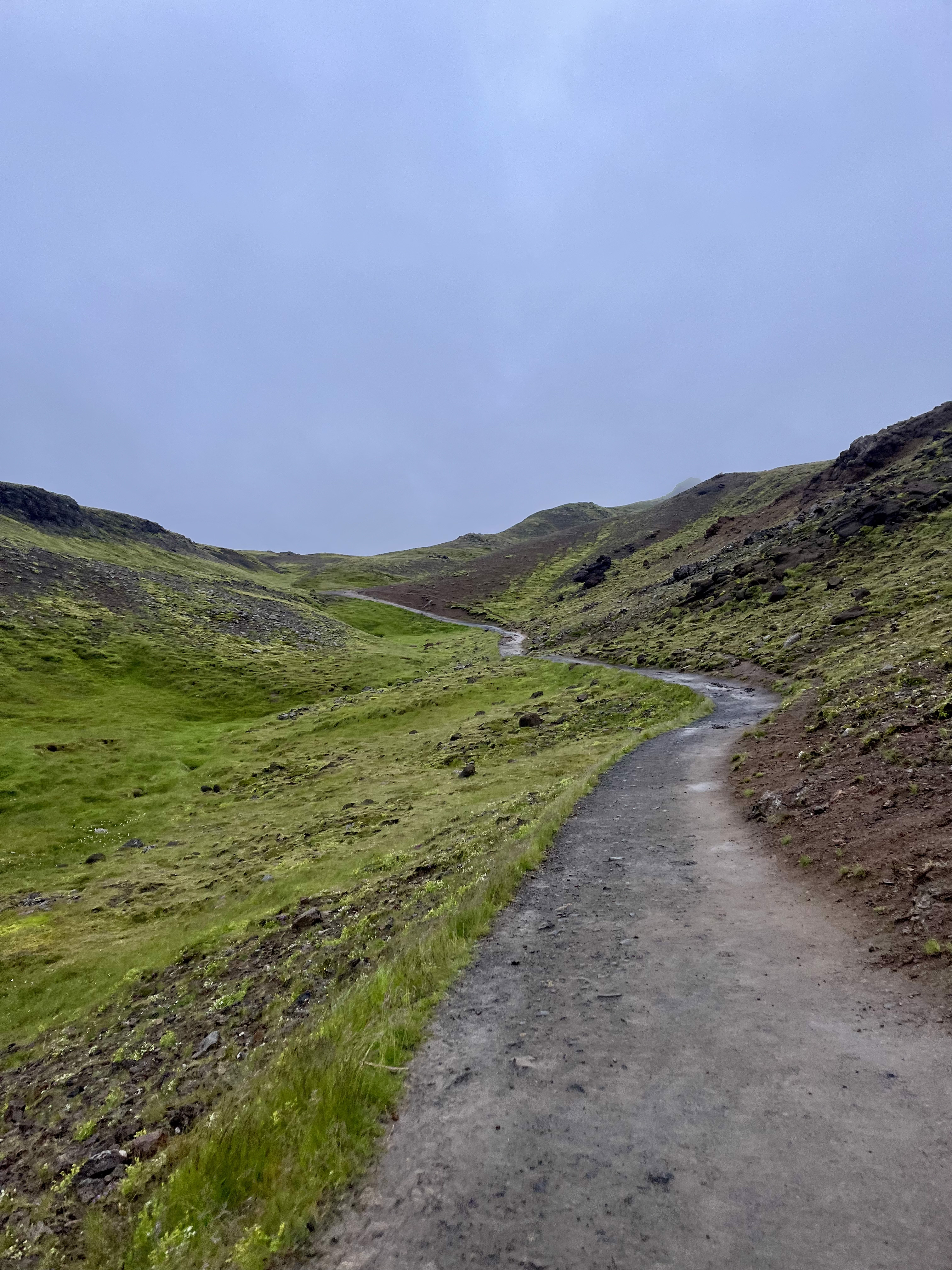
The Reykjadalur Hot Springs trail is about 5.5 miles round-trip, gaining a little more than 1,200′ of elevation along the way. You’ll begin the journey behind the Reykjadalur Skáli/Lodge, following the gravel trail up into the foothills. Hiking to the hot springs is almost entirely uphill, but the gradual ascent isn’t too steep or strenuous. Thankfully, the trail is very well-marked and easy to follow, so you don’t have to focus too much on navigation.
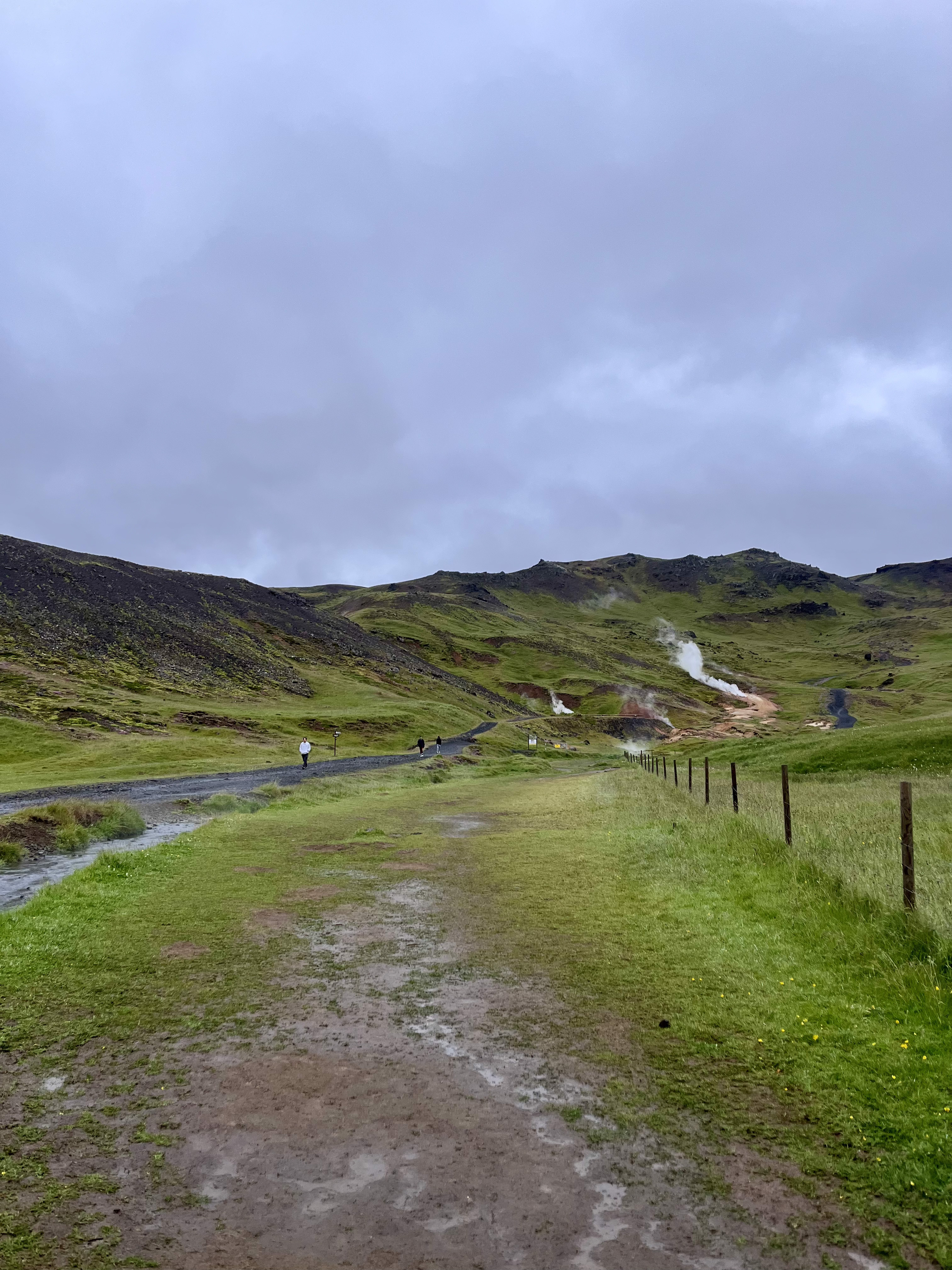
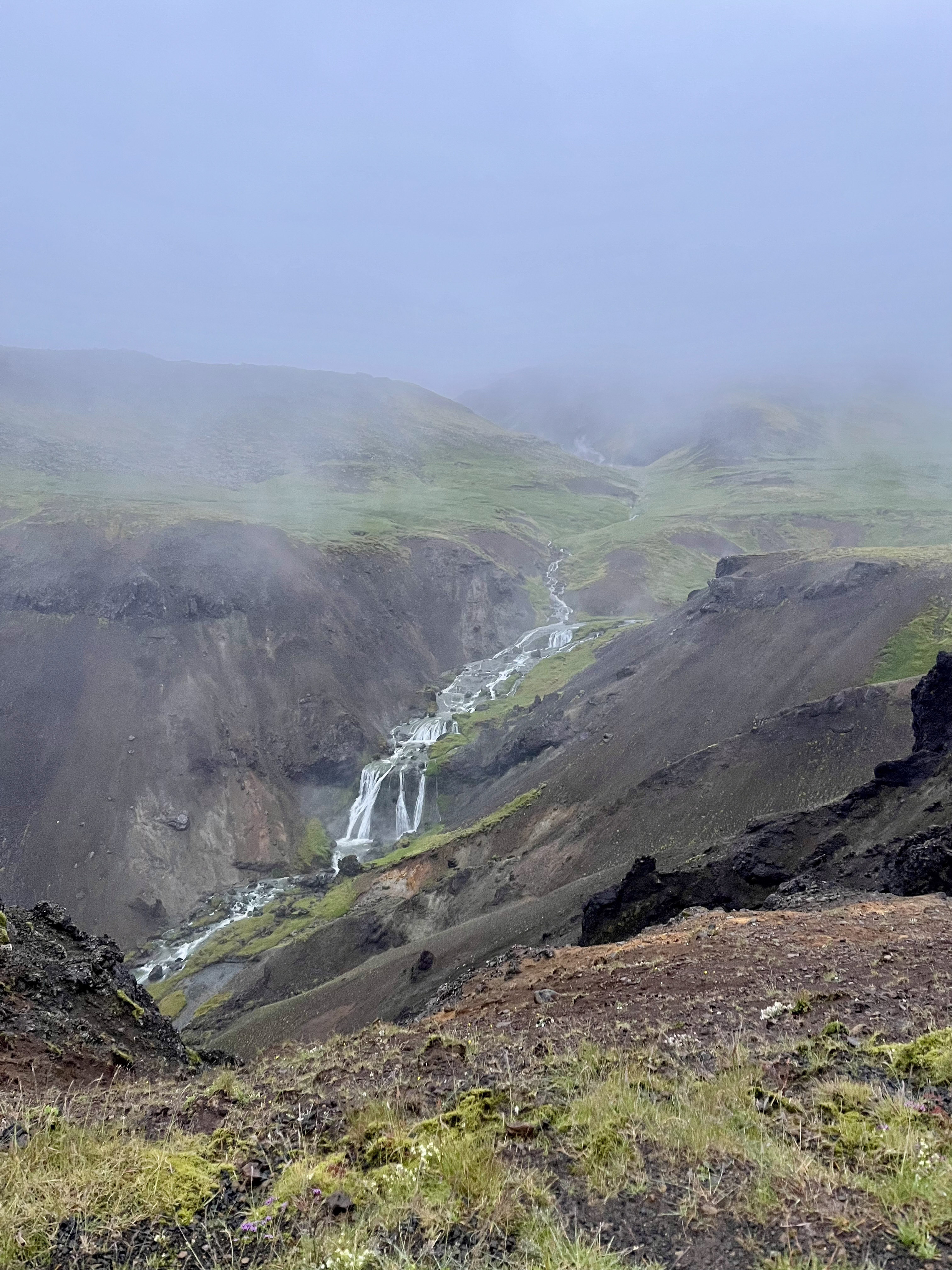
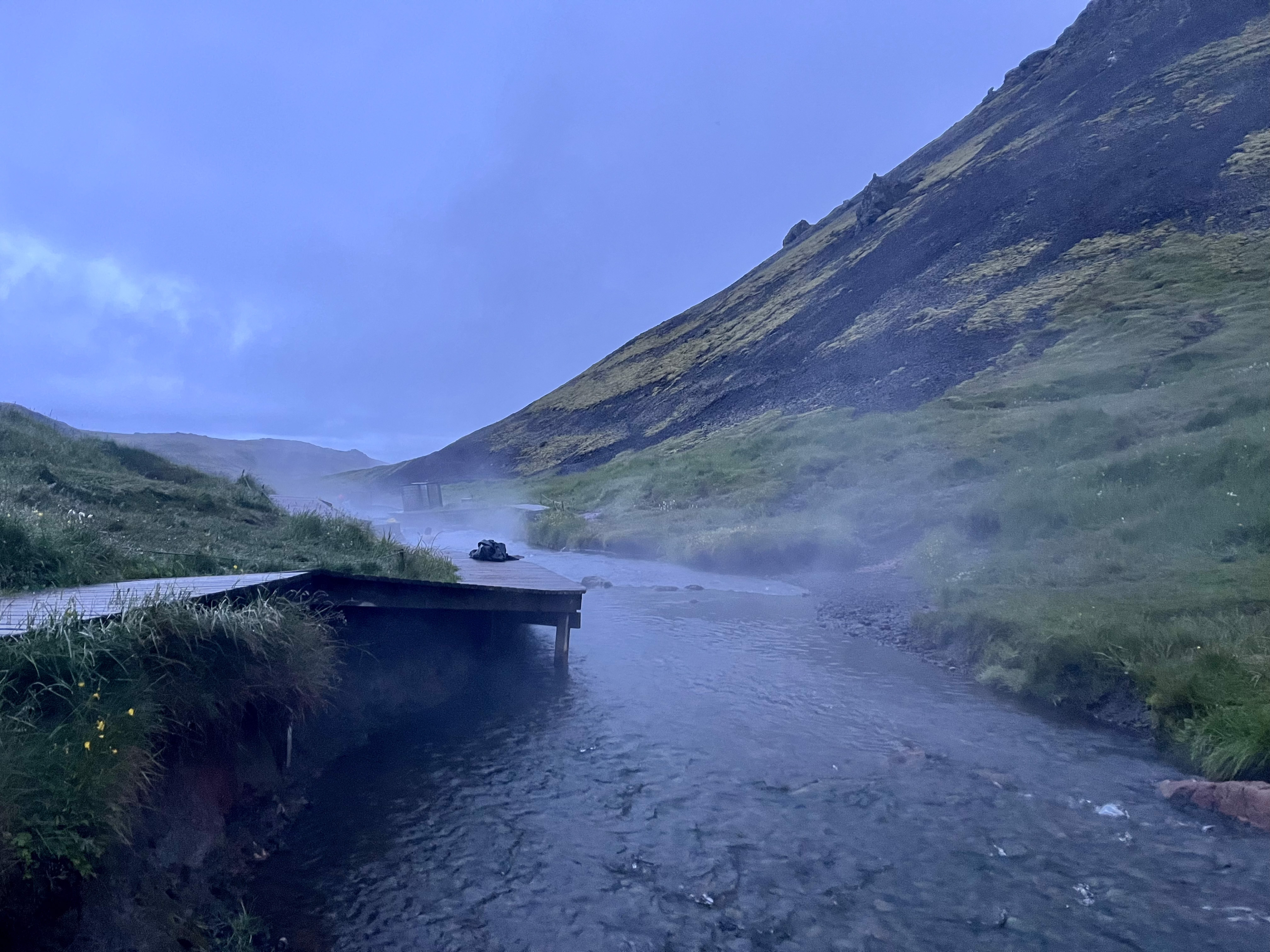
As you hike, you’ll notice billowing clouds of steam rising from the river and certain areas of the ground. The landscape is stunning and surreal—even in foggy, misty conditions. There’s a distant waterfall you can admire at one point in the hike, and you might even spot some sheep if you’re lucky! Be careful while hiking in the rain, as the gravel and mud can get quite slippery. The trail is also popular with horseback-riding groups, so keep an eye out for droppings.
Pro tip: Bring bug spray or a mosquito net if you hike during the day. I hear the bugs can be very annoying! Thankfully, we didn’t have to worry about that since we hiked at night.
Solomon and I made it up to the natural hot spring pools after about 45 minutes of hiking (with no breaks). You’ll know you’ve reached the soaking area when the gravel trail gives way to a wooden boardwalk. This portion of the thermal river is quite expansive, making it easy to find a private spot for you and your hiking companions. Several other groups were already enjoying the hot springs when we arrived around 11:30pm, but we had no trouble finding a pool for just the two of us. I can imagine the river gets very crowded in the mornings and afternoons.
Soaking in the hot springs feels incredible after the hike up. The water temperature in the pool we settled on was comfortably warm, but not too hot. I hear that the water gets hotter the further up the river you go—something to keep in mind, depending on your personal preferences. While the pools are relatively shallow, they were deep enough to fully submerge our bodies while propped up against rocks or the riverbank.
It was lightly raining as we lounged in the thermal river, so the warm water felt extra luxurious. The one downside to the weather was that we didn’t want to leave the pools to brave the chilly rain! We spent a little over an hour soaking in the river, eventually toweling off and calling it a “night” around 12:30am. Since we didn’t want to change at the hot springs, we just slipped our hiking clothes over our swimsuits. The walk back down to the car wasn’t the most pleasant experience, but we didn’t mind since it was a relatively short trek.
Pro tip: Pack a bag to stow wet swimsuits if you plan to change clothes at the hot springs. And don’t forget a towel!
Reykjadalur Hot Springs Final Thoughts
I highly recommend tackling the Reykjadalur Hot Springs hike for an unforgettable Icelandic adventure! It’s the perfect activity for those eager to get off the beaten path and experience an authentic hot springs setting. The trail to the thermal river is moderately challenging but 100% worth the effort. If you’re visiting Iceland during summer, consider hiking to Reykjadalur Hot Springs at night for minimal bugs and crowds.
I’ve been craving a weekend day hike, and Moore’s Wall Loop Trail was the perfect adventure! It’s located in Hanging Rock State Park, less than an hour north of Winston-Salem. The park has much to explore, with many hiking and biking trails of various lengths and difficulties. I’d love to return and take advantage of all the outdoor recreation opportunities that Hanging Rock State Park offers!
Moore’s Wall Loop Trail is a roughly 4.5-mile loop that starts at Hanging Rock Lake. Red circular markers indicate the trail, making it straightforward to follow. After a few minutes of hiking by the lake, you’ll arrive at a sign allowing you to continue straight and head clockwise around the loop, or bear right to tackle the loop counterclockwise. We opted for the clockwise route because I read the incline was more gradual from that direction.
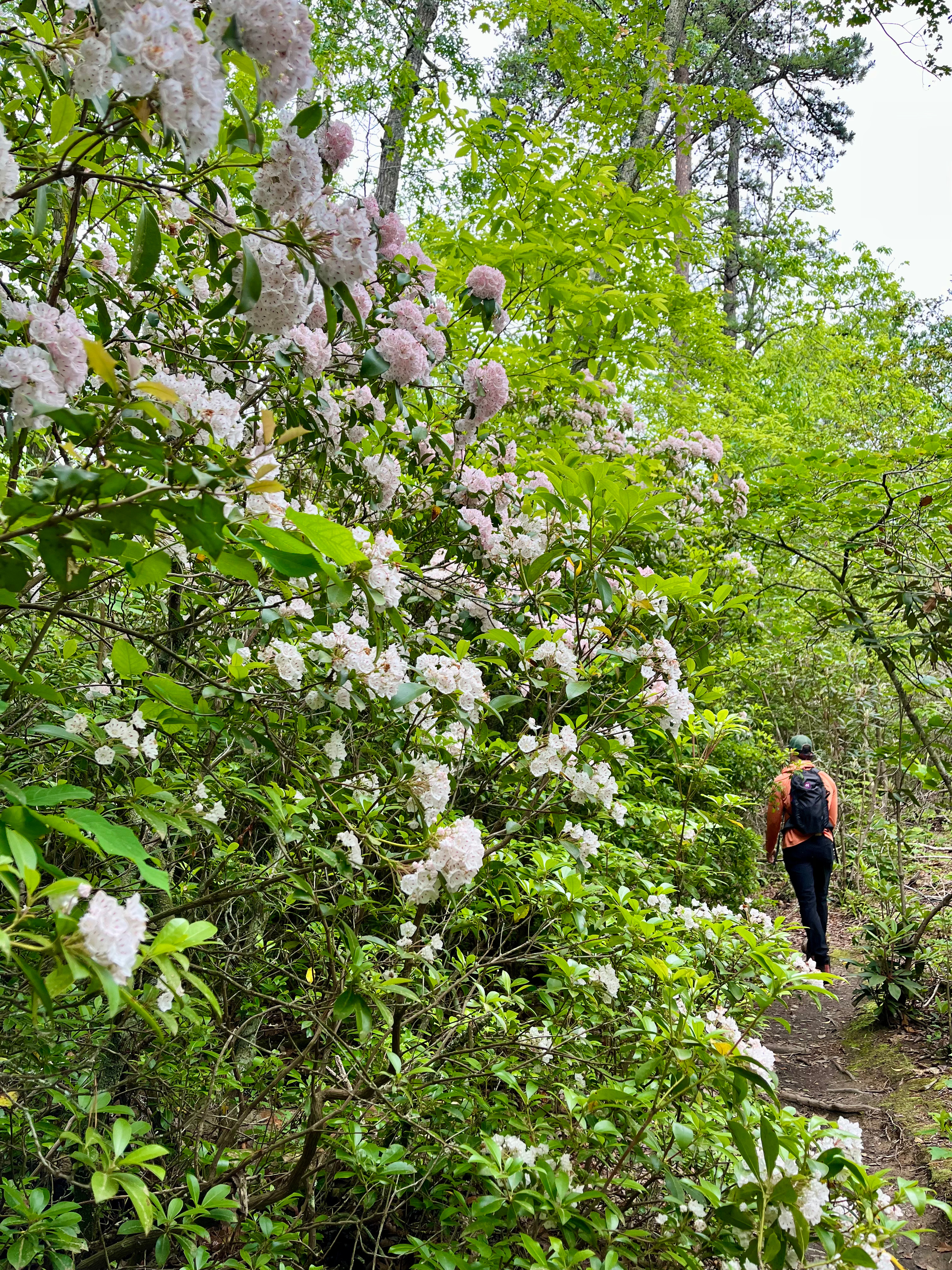
The trail is relatively easygoing, beginning to steadily gain elevation as you continue. We started the hike around 9:30am on a Sunday and only passed a few people on the way up. The mountain laurel and rhododendrons were in full bloom and absolutely stunning.
The trail got much rockier and steeper within 30 minutes of starting our hike. At one point, we spotted a snake sunning itself on the trail—definitely keep an eye out, especially if hiking with a dog, like we were! Keep your pups on leash to stop them from accidentally stepping on one as you hike.
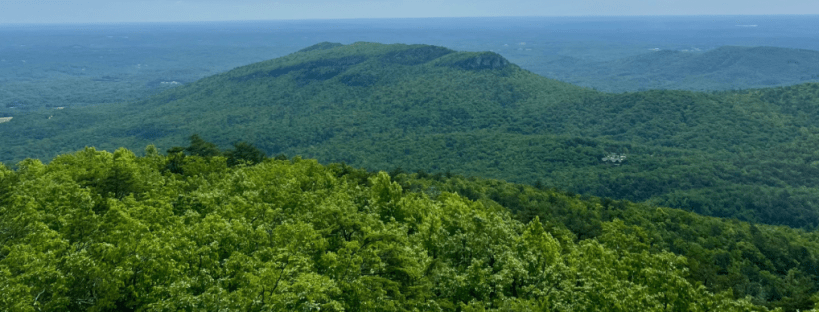
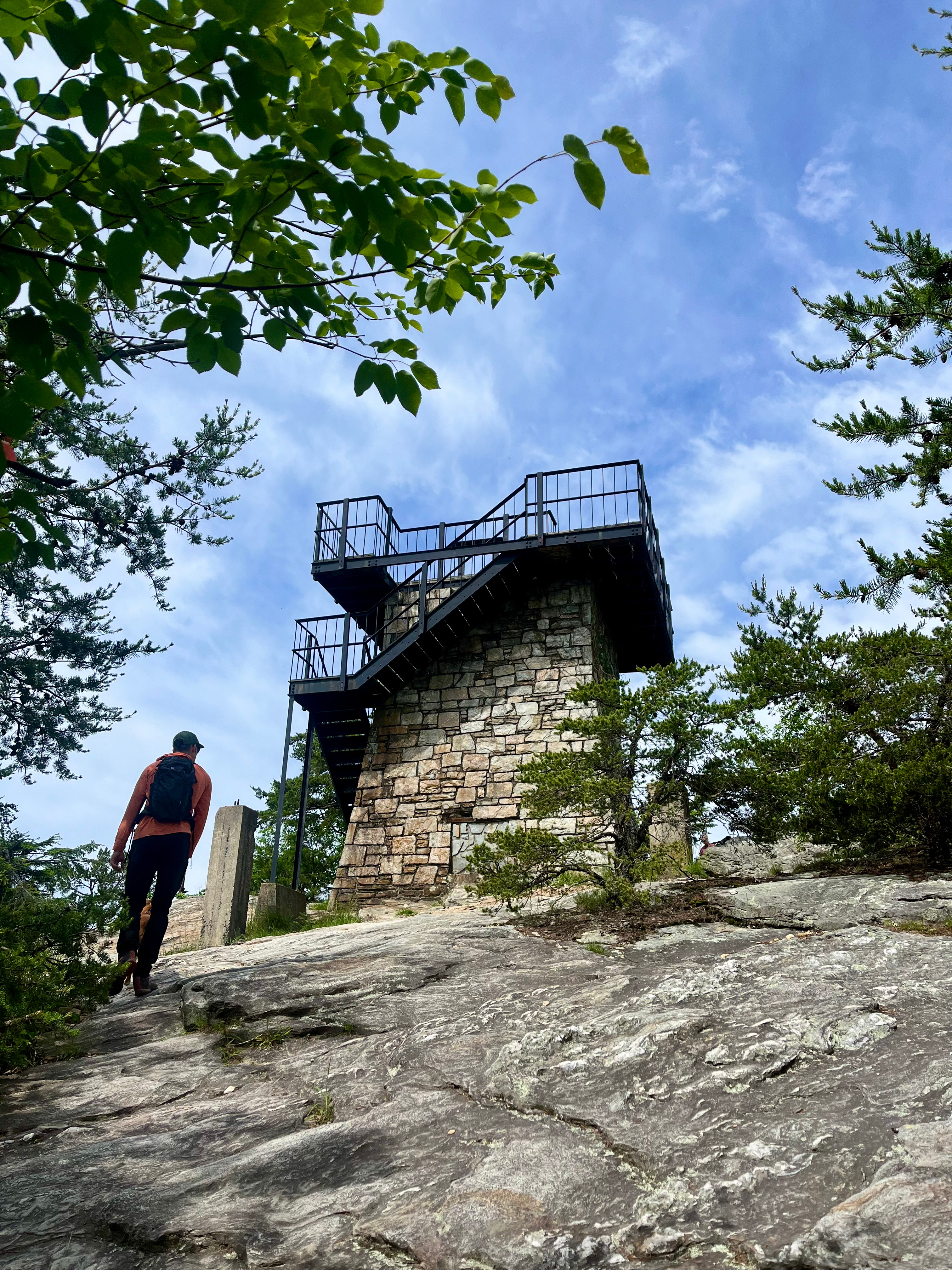
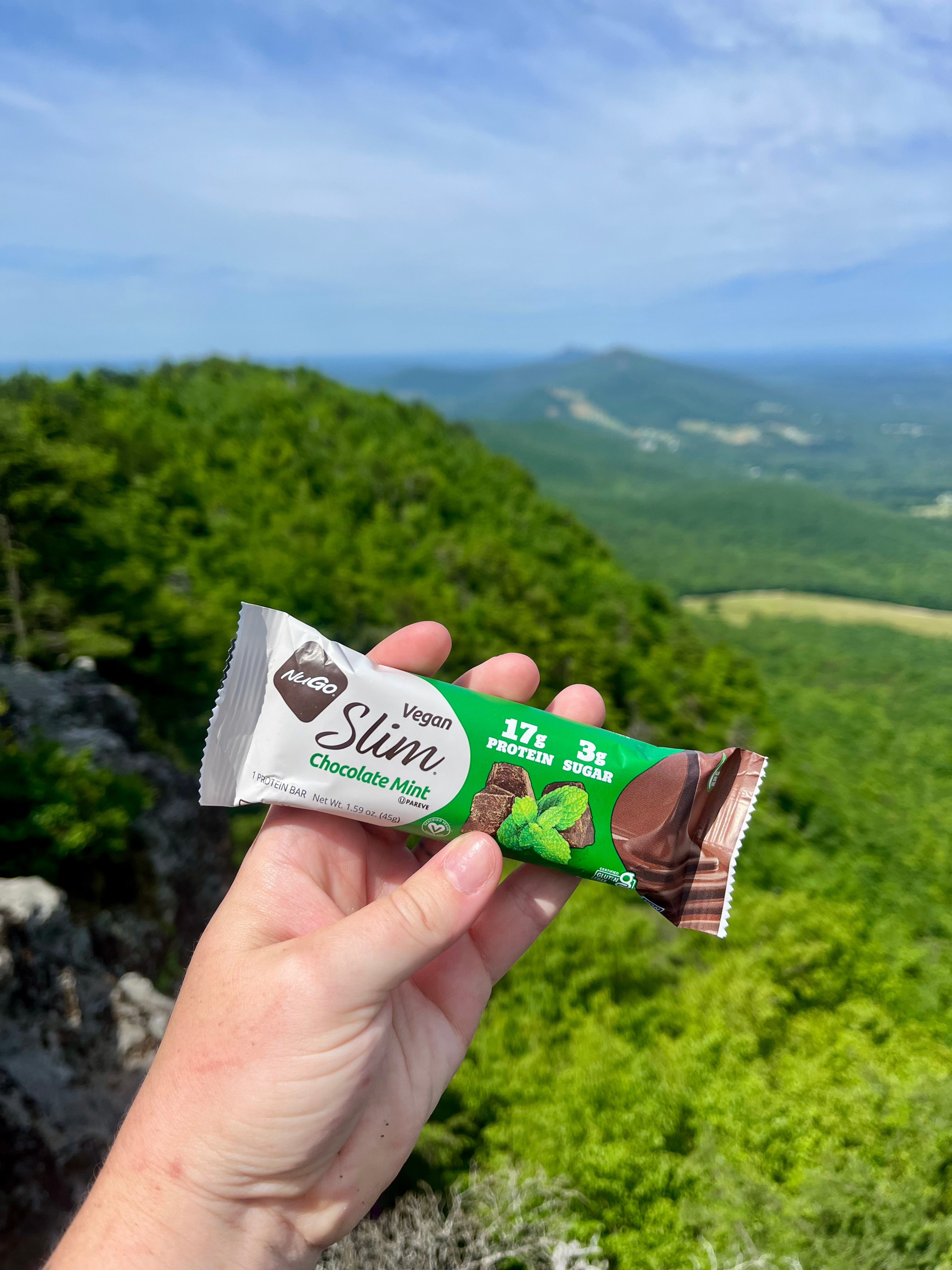
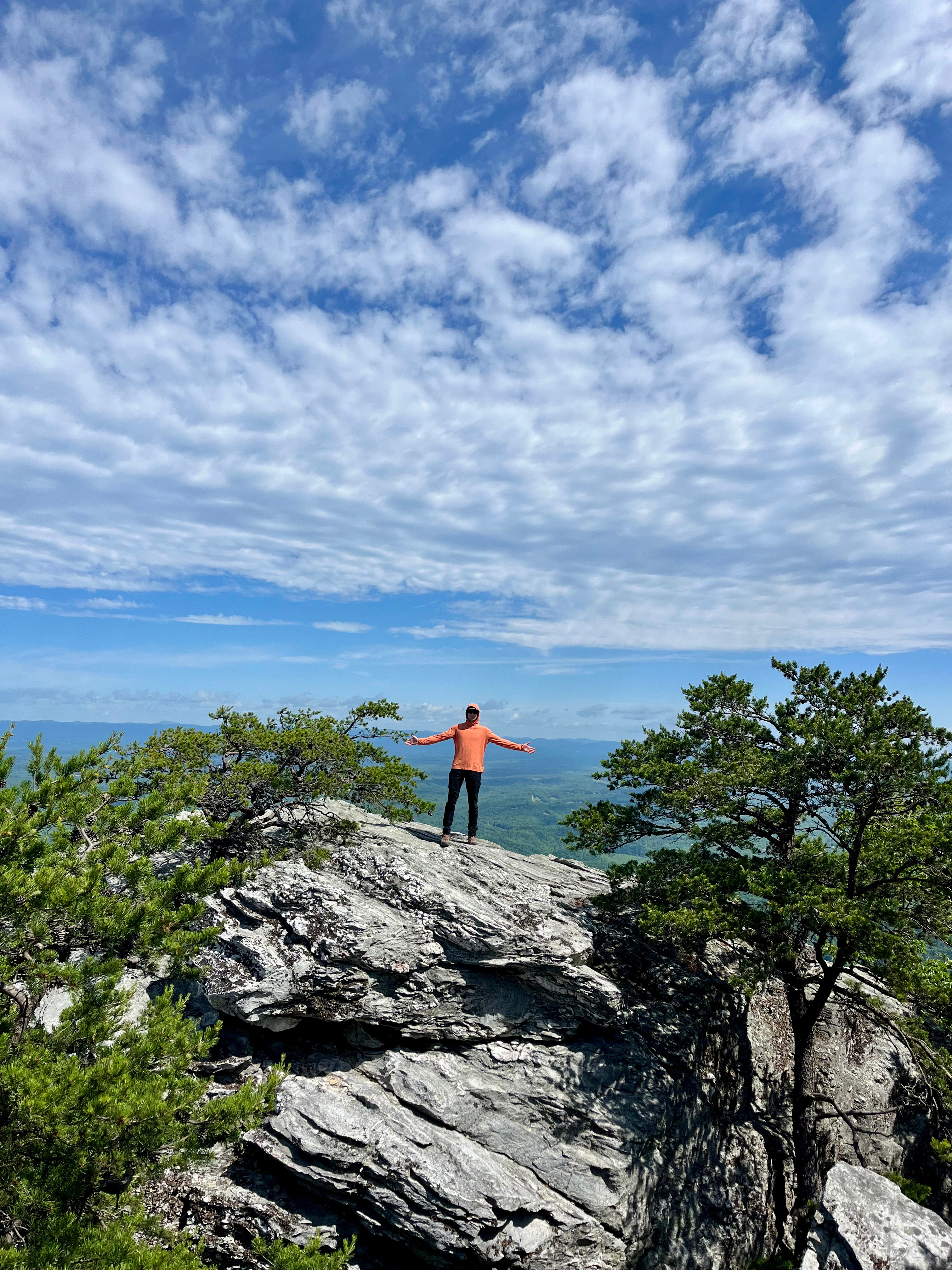
Around 11am, we arrived at the observation tower atop Moore’s Knob. From there, you can enjoy unobstructed 360-degree views of the surrounding mountains. It was a stunning reward for a short but challenging hike! We enjoyed the observation tower for a few minutes to snap pictures, give our dog water, and enjoy some protein bars before continuing along the loop.
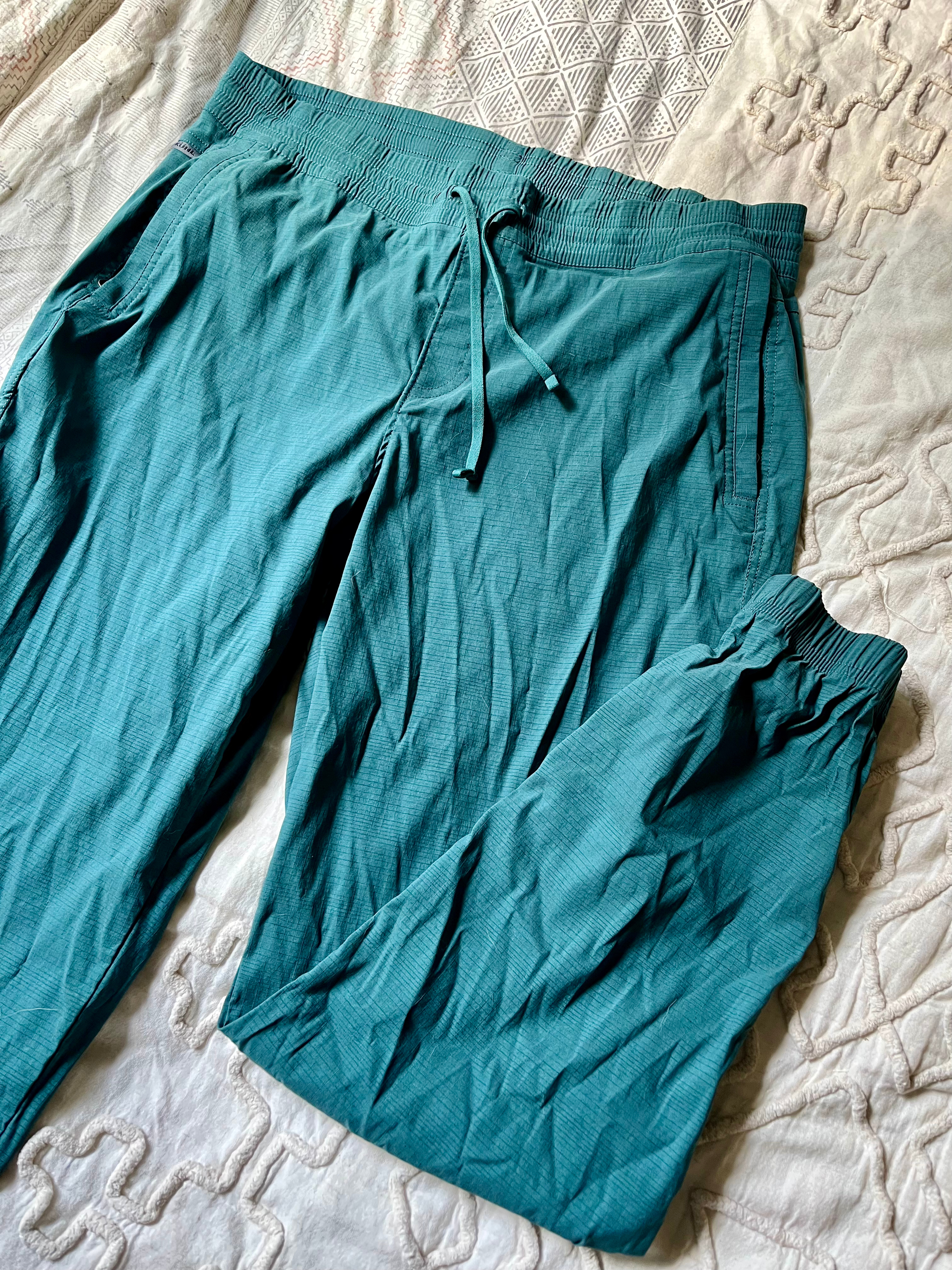
I must shout out the KÜHL hiking pants I tested on this adventure. KÜHL kindly offered to send me a pair to review—I settled on the Haven Joggr and was really happy with how they performed. The pants are made with a comfortable yet durable material that was perfectly flexible but supportive as I hiked.
I’m a big fan of the drawstring waistband because zippers and buttons can sometimes get annoying and restrictive. I also love all the zippered pockets and how they’re cuffed at the bottom. Plus, the Everglade color is too cute! Thanks to KÜHL for sending me these pants—they’ve secured a spot in my go-to hiking wardrobe.
The descent from Moore’s Knob featured many stone stairs, which made me glad that we chose to go clockwise. I much preferred tackling them downhill rather than going up them! About 0.4 miles from the parking lot, you’ll pass through a campground, which involves crossing the street to stay on the trail. It can be a little confusing, but just look for the red circular dots on the road indicating where to go.
By noon, we were back at the car and on our way to Publix to grab some subs for the drive home!
I highly recommend tackling Moore’s Wall Loop Trail next time you want a tough, fun hike that isn’t too long. Let me know your favorite North Carolina hikes so I can check them out!
Like many others, I’ve been reflecting on the past and looking forward to the future recently. With 2025 just around the corner, I was inspired to revisit and share some of my favorite memories from the past year. What were your highlights from 2024, and what are you excited about in 2025? I can’t wait to see what the new year has in store!
Staying at the Stanley Hotel
I’ve wanted to spend a night at the Stanley Hotel (the inspiration behind Stephen King’s “The Shining”) for years, and it finally happened in 2024. My husband, Solomon, and I took an overnight trip there in February, and it was an unforgettable stay.
The hotel was beautifully spooky, and we had a fun time wandering around the property. I highly recommend staying there if you’re a fan of history, horror, or the paranormal.
Witnessing the Total Solar Eclipse
My dad is a phenomenal astrophotographer, so when he asked over a year ago if I’d be interested in traveling to Arkansas with him to see April’s total solar eclipse, I was immediately in! We found a cute and relaxing lakeside Airbnb in Hot Springs and he successfully captured the entire event.
Watching the world go dark was surreal and an insanely cool experience to share with my dad. We also checked out Hot Springs National Park and the Garvan Woodland Gardens, which were stunning.
Visiting Disney World + Universal Orlando
It might be a bit silly, but I made great memories during a trip to Disney World and Universal Orlando with friends earlier this year. I hadn’t been to Universal in over a decade and it was fun to revisit the resort. I enjoyed it so much that I recently returned for a one-day solo trip! Why not, right?
Driving from Georgia to Colorado
Solomon spent a few weeks working in Georgia over the summer, and we road-tripped back home to Colorado after he wrapped up. My best friend joined us and we had quite the eventful journey through Tennessee, Arkansas, and Oklahoma. I loved having an excuse to spend quality time with some of my favorite people and explore new places.
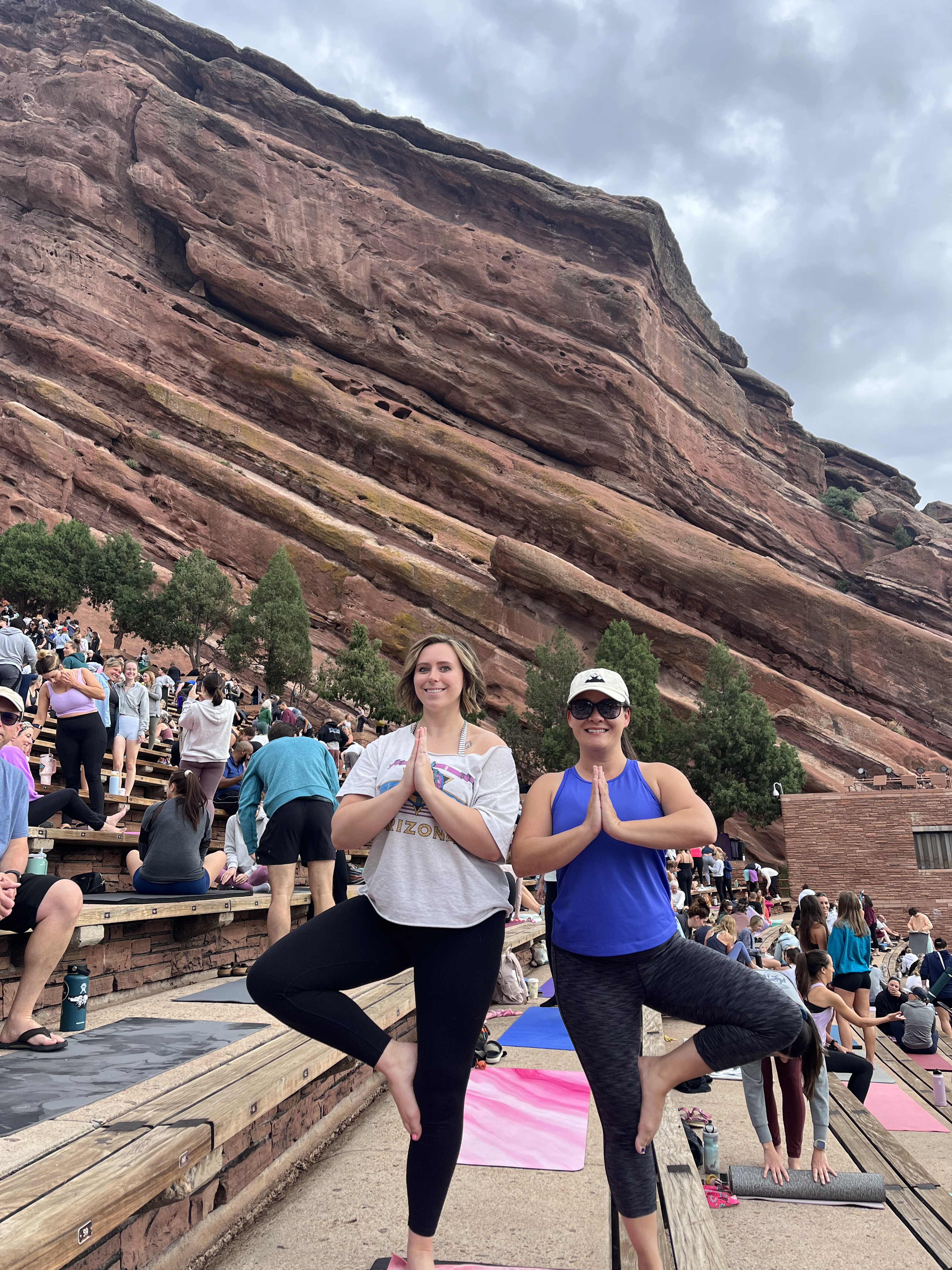
Taking a Yoga Class at Red Rocks Amphitheater
Going to an event at Red Rocks Amphitheater was one of the top items on my Colorado bucket list. Sadly, things didn’t align for me to see a concert there, but I did attend a sunrise yoga class with a friend. It was 100% worth the early wake-up call and an amazing start to the day!
Selling Our House
At the beginning of 2024, Solomon and I knew we’d be moving out of state before the end of the year. That time officially came over the summer when we sold our home and prepared to move cross-country. If you’ve sold a house, you know how stressful it can be—we learned a lot of tough lessons throughout the process.
As frustrating as selling the house was at times, we were incredibly blessed to have a buyer go under contract the same day it hit the market! I’m grateful that everything worked out, even if there were some bumpy moments.
Going on a National Parks Adventure
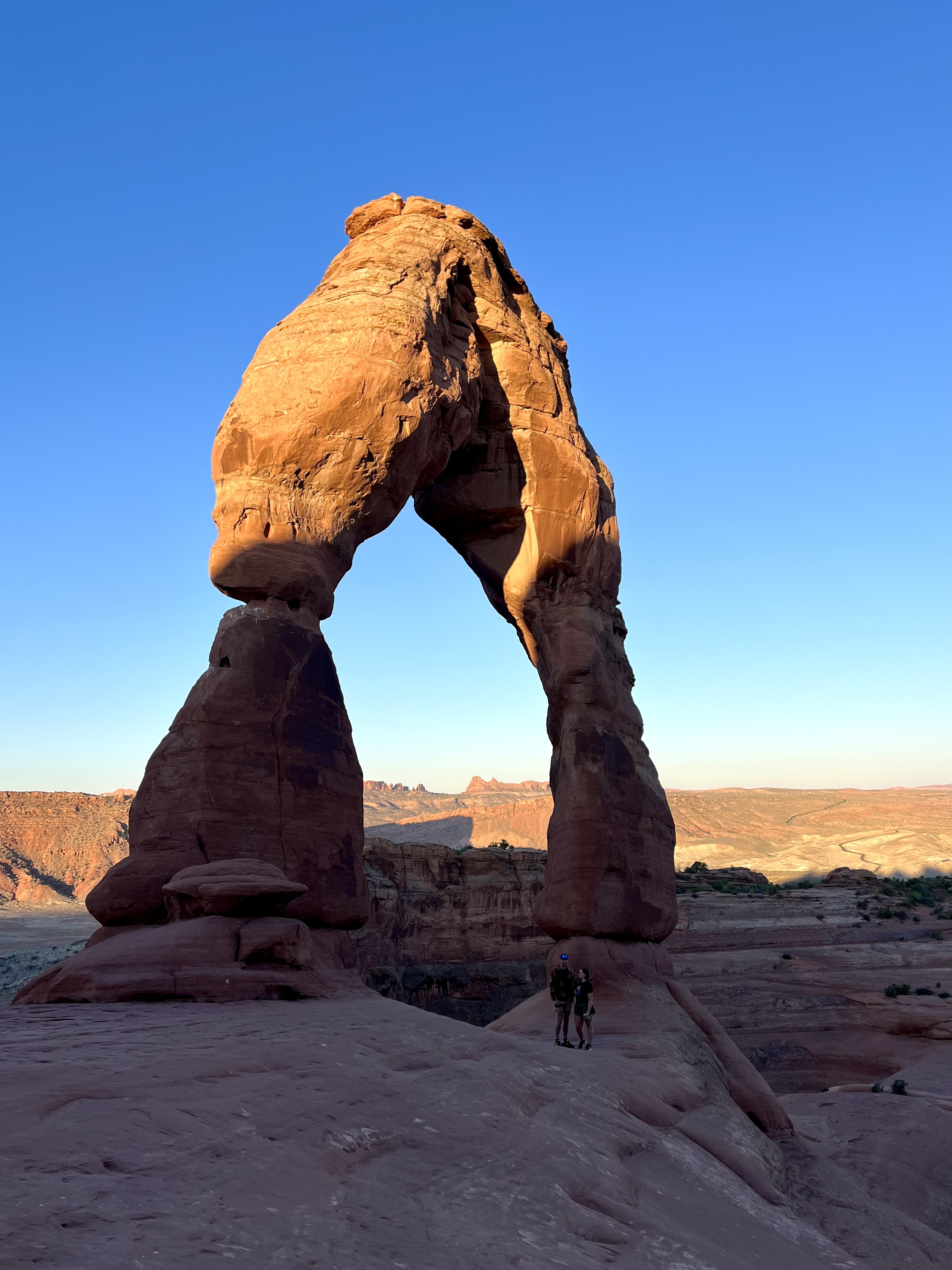
One of my favorite experiences this year was going on a weekend adventure to four new national parks. Solomon and I visited Black Canyon of the Gunnison, Arches, Canyonlands, and Mesa Verde—it was a blast!
We went hiking, took a scenic off-road drive, and stayed in an adorable tiny house in Moab. I’d love to take a longer trip to the parks in the future for more sightseeing.
Spending Labor Day in Newport, Oregon
My parents live on the Oregon coast, so Solomon and I decided to visit over Labor Day weekend. I always enjoy going to Newport because there’s so much to do, from whale-watching to trying local foods, admiring tidal pools, and more.
The highlight of this trip for me was seeing my dad’s astrophotography exhibition at his local arts center. I’m so proud of him and his work never ceases to blow me away!
Moving to North Carolina
When September rolled around, Solomon and I said goodbye to Colorado and hit the road for North Carolina. It was an interesting experience, to say the least—we packed and moved everything out of the house and into a storage unit while staying in an Airbnb for two months, waiting for the military to decide when and where we’d be moving.
Once we got the green light for North Carolina, we moved everything out of the storage unit and into a freight truck to be shipped. We hitched my car to the back of Solomon’s truck, piled in with our belongings and Willie, our dog, and made our way across the country. There were some looong days on the road, but we made the most of it and got to see some friends along the way, too.
Getting Settled
We’ve been in North Carolina for a little over three months now and it’s definitely starting to feel like home. While no location is 100% perfect, there’s a lot to love about living in North Carolina. Our current house has much more outdoor space than our previous one, including a screen porch and a fenced-in backyard, which Willie loves.
The cost of living is significantly lower compared to Colorado, and we’ve already hosted friends and family several times. We’ve also been exploring the state and have taken trips to Carolina Beach and Hot Springs. After all the moving chaos, I’m so thankful we’re finally settled in a safe and comfortable living space that’s just right for us.
‘Tis the season for holiday shopping and gift-wrapping! I was recently inspired to share a video on my YouTube with gift ideas for National Park lovers. While making it, I started to think about all the helpful hiking gadgets and accessories I’ve accumulated over the years.
Truthfully, you don’t need much to start backpacking other than the obvious: a sleeping bag, a water purification system, food, etc. However, having a few small extras on hand can dramatically improve your experience on the trail.
Here’s my official holiday gift guide for hikers and backpackers!
1. Seat Pad
A seat pad is pretty much exactly what it sounds like: a compact, cushioned pad that gives you something to sit on other than the ground. It’s a handy accessory for taking a load off while you’re making food around the campfire after a long day of hiking.
I’ve had the Therm-a-Rest Z Seat for years and highly recommend it, but there are plenty of cheaper options that work just as well. I like how this seat pad folds up with a bungee closure so I can tuck it into an exterior pocket on my pack for easy access.
2. Water Shoes
Every hiker needs a solid pair of water shoes for creek crossings. They’ll save you from hiking around in wet socks and shoes—a recipe for blisters. A lot of people go for Chacos or Crocs, but I’m a fan of the Teva Original Universal Sandal (which I’m holding in the picture above) because it’s comfortable and lightweight.
3. Satellite Device
In my opinion, a satellite communication device is an essential safety item for backpacking. Most wilderness areas have limited or nonexistent cell service, making it challenging to stay in touch with friends and family or get help in an emergency.
Satellite communicators are an excellent tool for sending updates to loved ones and calling for help during your backpacking trips. I have a Garmin inReach Explorer which is now discontinued, but the brand has other similar versions like the inReach Mini 2.
4. Solar Lantern
While a solar-powered lantern isn’t a backpacking necessity, it is fun to have. I’ve owned a LuminAID for years and it’s come in handy many times.
I don’t notice it hanging on my backpack while I hike because it folds flat, and it provides the perfect amount of light. I usually pull the lantern out in my tent at night when I’m settling in for bed so I don’t waste my phone or headlamp battery.
5. Shoe Gaiters
Help your favorite hiker stay comfortable on the trail with a pair of shoe gaiters. These footwear accessories clip onto the outside of your sneakers or boots to block dirt, rocks, and other debris. They can make a world of difference, helping you cut down on the number of times you have to stop and shake your shoes out.
While there are many gaiter styles available, I like low trail/running gaiters—my Outdoor Research gaiters (which I’m wearing in the picture above) are super old but still get the job done. There also tall versions that cover almost the entire leg, as well as waterproof options.
6. Microspikes
If you’re shopping for someone who frequently hikes in the show, consider gifting them a pair of microspikes. Microspikes are typically made of rubber, with small metal parts that give you traction when hiking in slick conditions.
They slip onto the bottom of your shoe to provide extra grip when navigating snow or ice. Kahtoola is one of the most popular and trusted microspike producers, but most within the $50-75 range should be fairly high-quality.
7. Neck Gaiter
A neck gaiter is somewhat similar to a shoe gaiter, but its main purpose is to block the sun. Brands like BUFF make these versatile all-season pieces. They’re commonly worn around the neck (hence the name) but can be used in many ways.
In a pinch, you can turn the gaiter into a face mask, hood, balaclava, and more. Make sure the fabric is moisture-wicking and breathable—UPF protection is also a bonus.
If you’re experiencing a period of loneliness, my heart goes out to you. Whether you moved away from home for work or school or you don’t have a close relationship with family, I can only imagine how bittersweet this season feels. Movies portray the holidays as a perfect time of year when everyone comes together and is happy, but life is much more complicated.
Regardless of your circumstances, I want to share some tips for making the most of your time alone. My husband is in the military, so I’ve spent many months getting comfortable with doing things solo. Just last year, we spent most of the holiday season separated while he was on an overseas deployment.
Here are some of my favorite solo things to do around the holidays to get in the festive spirit and embrace the alone time:
1. Drive around and look at the Christmas lights
One of my favorite holiday activities is driving around with my dog and a cup of hot cocoa to admire the Christmas lights while listening to festive music. It’s a super cheap, fun way to celebrate and embrace the season. I find it virtually impossible to be in a bad mood while looking at Christmas light displays!
2. Have a cozy night in
While I think it’s important to get out of the house and socialize, I also think it’s healthy to stay in and relax every now and then. I appreciate nights where I can kick back with a glass of wine, watch a movie, order takeout, put on a face mask, and savor my solo time. Brainstorm a few things that help you feel refreshed and set aside a night to indulge in whatever recharges you.
Being alone is, in my opinion, one of the best opportunities to pursue new interests. I like to make the most of my extra free time by branching out and trying things out of my comfort zone. This could be anything from signing up for a pottery-making class (which is on my list of must-try solo activities!) to tackling a DIY project or exploring upcoming local events.
4. Go to the movies
I love watching movies and take any chance I get to go on solo movie theater dates. Usually, I’ll try to go during the week or a weekend matinee so the theater isn’t too crowded. It can feel awkward to see a movie by yourself, but I’ve done it many times now that it’s obvious no one really cares or even notices. Grab your favorite drink and snacks, settle in, and enjoy the experience.
I find volunteering to be an excellent use of solo time, especially around the holidays. Get plugged into your community to find organizations needing your time for various projects. Volunteer work isn’t always glamorous, but it’s incredibly fulfilling to pour into others and give what you can to a cause that’s greater than yourself.
6. Cook a new recipe
When I know I’m flying solo because my husband will be away, I like to experiment with new recipes and meals. I’m definitely guilty of cooking the same things over and over again—I don’t want to waste time and money on a recipe that doesn’t turn out! It’s easier for me to justify cooking new foods when I’m alone since I won’t be wasting as much food if I don’t end up liking it. For instance, my favorite recent recipe find was a tofu pumpkin curry that I’ve now incorporated into our weeknight dinner rotation.
7. Challenge yourself physically
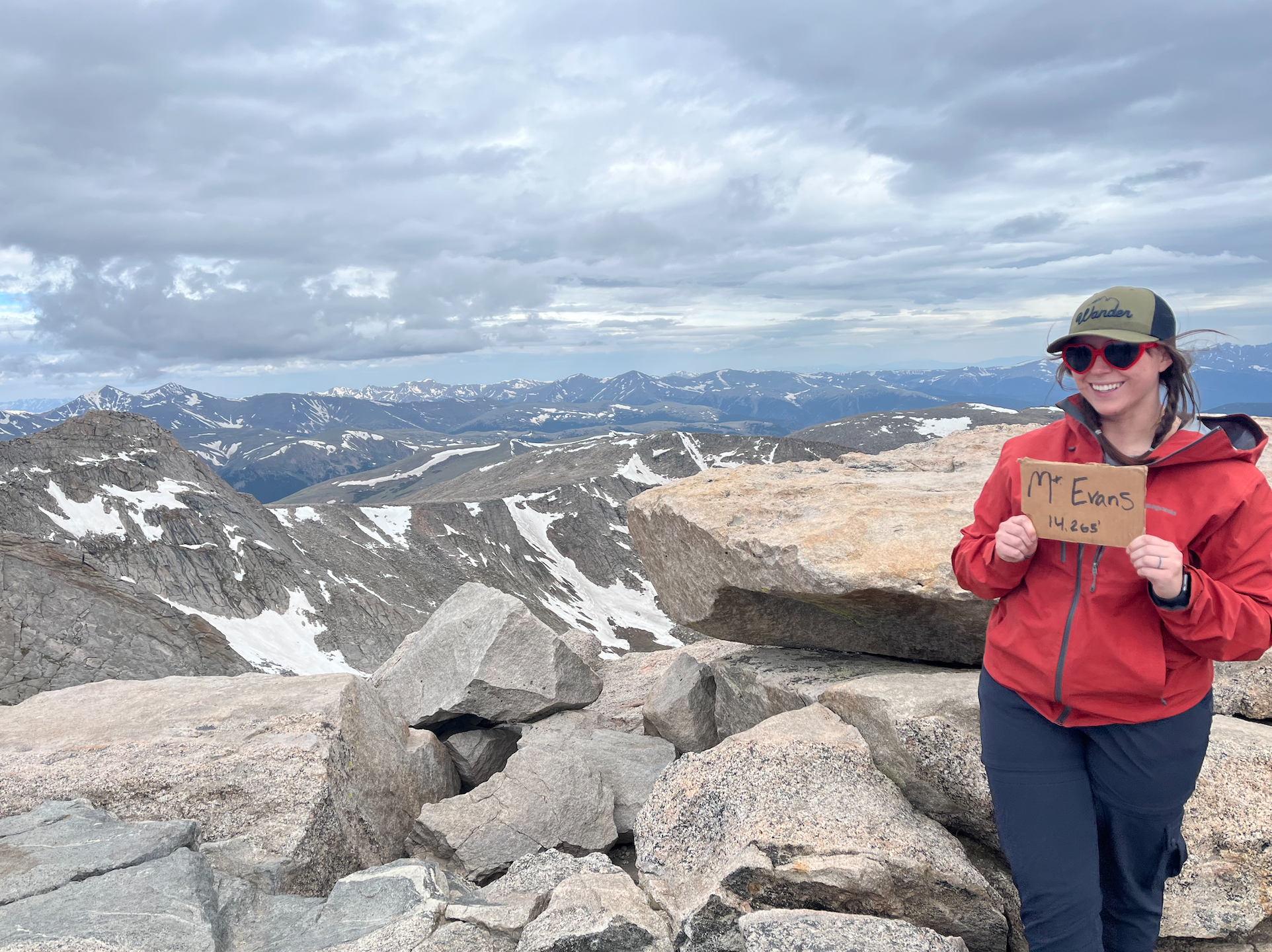
My first solo Colorado 14er, Mount Blue Sky (formerly Mount Evans)
From festive races to holiday-themed fitness classes, now is the perfect time to push yourself physically. It can be tempting to spend the season curled up on the couch bringing Christmas movies and splurging on sweet treats.
While I can only speak from experience, I feel much better—physically, mentally, and emotionally—when I’m getting active on a regular basis. Activities like yoga, rock climbing, running, hiking, aerial silks, barre, and CrossFit have made a significant difference in feeling healthy and fulfilled while I’m alone.
8. Reach out to someone
There have been several phases of my life where I’ve felt lonely, especially after moving halfway across the country from our closest friends and family. Being physically separated from your support system can make it hard to connect with loved ones, leading to feelings of isolation.
When I begin to fill down about missing friends and family, I try to reach out and let them know I’m interested in catching up. Sure, it’s not the same as physically being with them, but it comes pretty darn close. Maintaining those long-distance relationships takes effort, but it makes you value the times you do see each other in person so much more.
9. Explore somewhere new
Travel is another huge love of mine, and I’ve been fortunate to take some incredible solo trips in the past to places like Washington, D.C. and New Mexico. Visiting somewhere you’ve never been before is so exciting and enlightening.
I’ve created many lifelong memories during my solo travel experiences, even if I was just taking a day trip somewhere nearby or exploring a neighborhood in my area. Of course, you should always put safety first—but I highly encourage anyone interested in traveling alone to go for it!
10. Handle something you’ve been procrastinating
This last tip isn’t the most glamorous, but it has been one of the most helpful in navigating alone time. Seize this opportunity to finally tackle that house project, random task, or annoying to-do that you’ve been putting off.
I completely understand not wanting to spend an afternoon reorganizing your closet, getting your teeth cleaned, or sitting on the phone with your insurance company. However, I promise you’ll feel relieved and accomplished after taking care of it once and for all.
Hopefully you’re inspired to seek joy as much as possible during the holiday season, even if you are spending it alone! At the end of the day, it’s a chance to learn more about yourself and get comfortable being independent—so maximize it to the fullest extent.
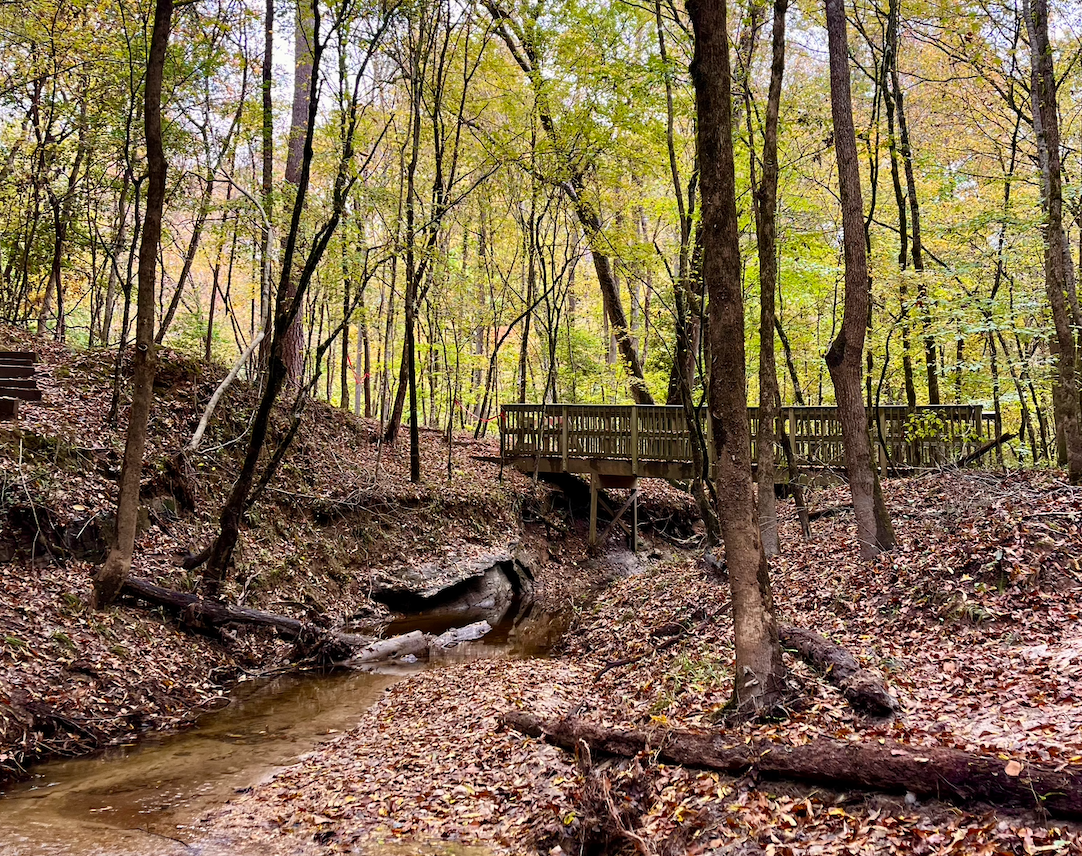
With the fall colors finally beginning to appear in our area, my husband and I set off on a leaf-peeping adventure. We decided to explore Raven Rock State Park, which is a quick 20 to 25-minute drive from our house. It was a cloudy, crisp fall day—perfect for admiring the autumn foliage.
Our initial plan was to check out the Fish Traps Trail, but we ended up on the Raven Rock Loop Trail. The path gradually descended through the forest, leading us to a junction after about 1/4 mile. We decided to head right and follow the Little Creek Loop Trail. This roughly 3-mile-long path follows a small creek to a camping area before looping back to reconnect with the Raven Rock Loop Trail.
There were beautiful mountain laurel shrubs and fall colors along the way. We saw a few deer at one point and only a handful of other hikers as we meandered through the woods. Our dog had a blast smelling every plant and tree he could and getting his paws wet in the creek. Little Creek Loop Trail was the perfect way to spend a Sunday morning—we’ll definitely be back to check out more trails in the state park.
I’m doing something a little different this week and sharing resources to help those in Western North Carolina affected by Hurricane Helene. My husband and I just moved to NC and while Fayetteville wasn’t hit too bad, we have some friends and family in the Asheville area who are experiencing severe flooding and loss of power, rationing supplies, and are essentially stuck in place due to poor road conditions.
We were just in Asheville at the beginning of September, and it’s hard to fathom all the damage that’s occurred from the hurricane. I’m thinking of and praying for everyone in the affected areas—while we can’t physically be there to provide support, there are many ways to help from afar:
American Red Cross – the Red Cross has several Hurricane Helene initiatives for impacted areas throughout Florida, Georgia, and the Carolinas. You can visit their website or text HELENE to 90999 to make a donation. They also have resources for finding a shelter, locating loved ones, and giving blood.
North Carolina Voluntary Organizations Active in Disaster (VOAD) – the VOAD has compiled a list of contact information for statewide Long-Term Recovery Groups and Community Organizations Active in Disaster, letting you find ways to support disaster relief efforts in your local county.
GoFundMe – while you should be cautious about donating to random GoFundMe pages, the company has create a hub of verified fundraisers for those affected by Hurricane Helene.
Operation Airdrop – on September 30, Operation Airdrop will begin flying essential supplies to areas of Western NC hit by Hurricane Helene. You donate money, supplies, or your time by volunteering at the flight staging area in Concord.
Samaritan’s Purse – you can donate or sign up to be a volunteer through Samaritan’s Purse. The organization’s headquarters are located in Boone, which has been severely impacted by flooding, downed trees, and loss of water and electricity.
Forsyth Humane Society – email foster@forsythhumane.org with the subject “Hurricane Helene Foster” or visit their website to help animals displaced by Hurricane Helene. They are partnering with the BISSELL Pet Foundation to assist the Asheville Humane Society, which urgently needs fosters.
North Carolina Community Foundation – donate to the North Carolina Community Foundation’s Disaster Relief Fund, which supports mid- and long-term relief efforts in Western NC.
Appalachia Funders Network – this organization has launched an Appalachian Helene Response Fund to provide support to areas throughout the region most impacted by the hurricane. Check out the website to learn more and donate.
Please keep Western NC and all the other Southeastern areas hit by Hurricane Helene in your thoughts and help if/however you’re able to! Stay safe out there.
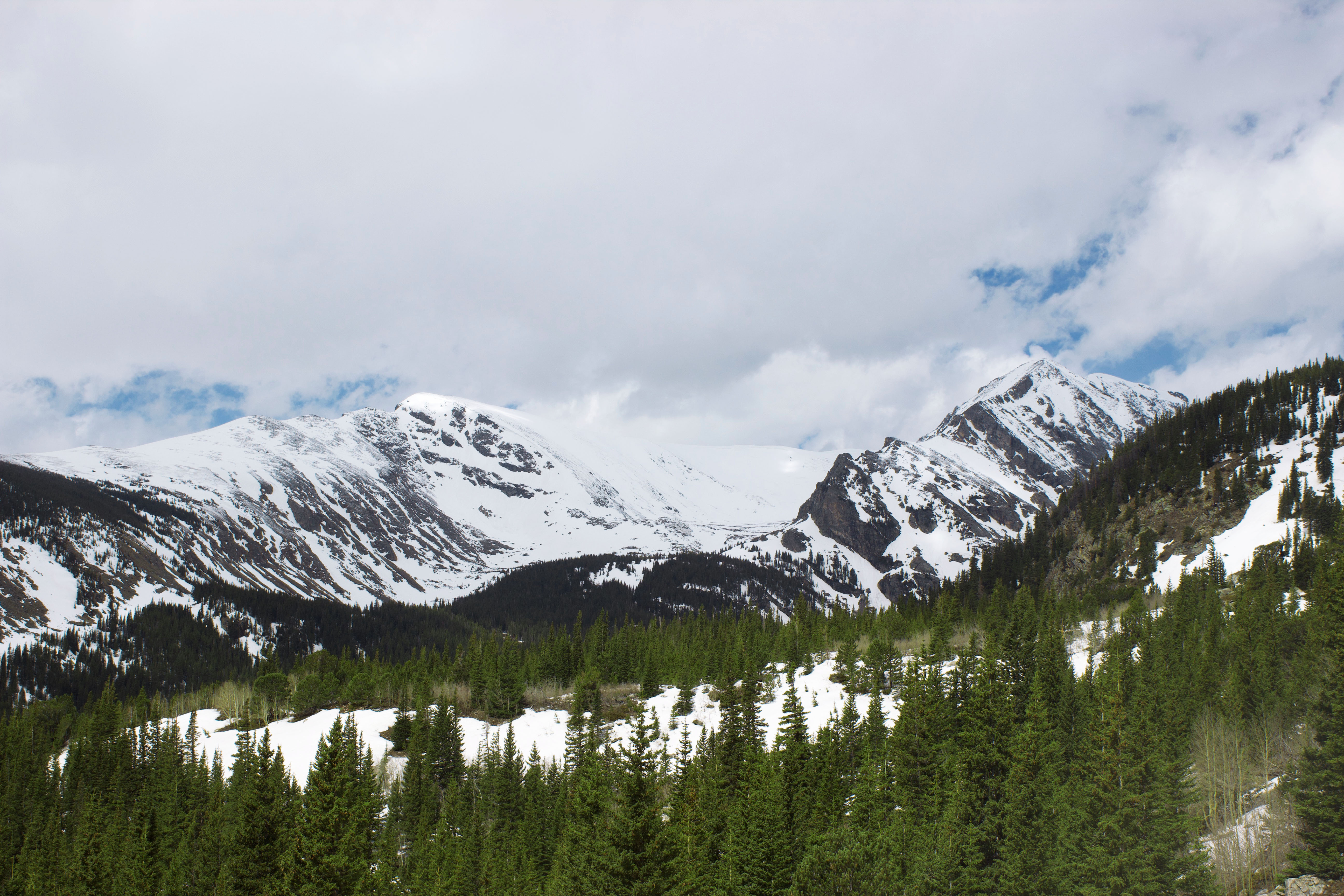
I’m sharing the ultimate Colorado hiking guide to some of my favorite can’t-miss hikes in Colorado, ranging from easy to challenging. I recently relocated from Colorado after four wonderful years, and I was fortunate to tackle many unforgettable hikes during my time there. Colorado has trails for all ages, abilities, and experience levels, making it the ideal destination for outdoor lovers. Check out these essential Colorado hikes next time you’re in the Centennial State!
Easy
Paint Mines Trail
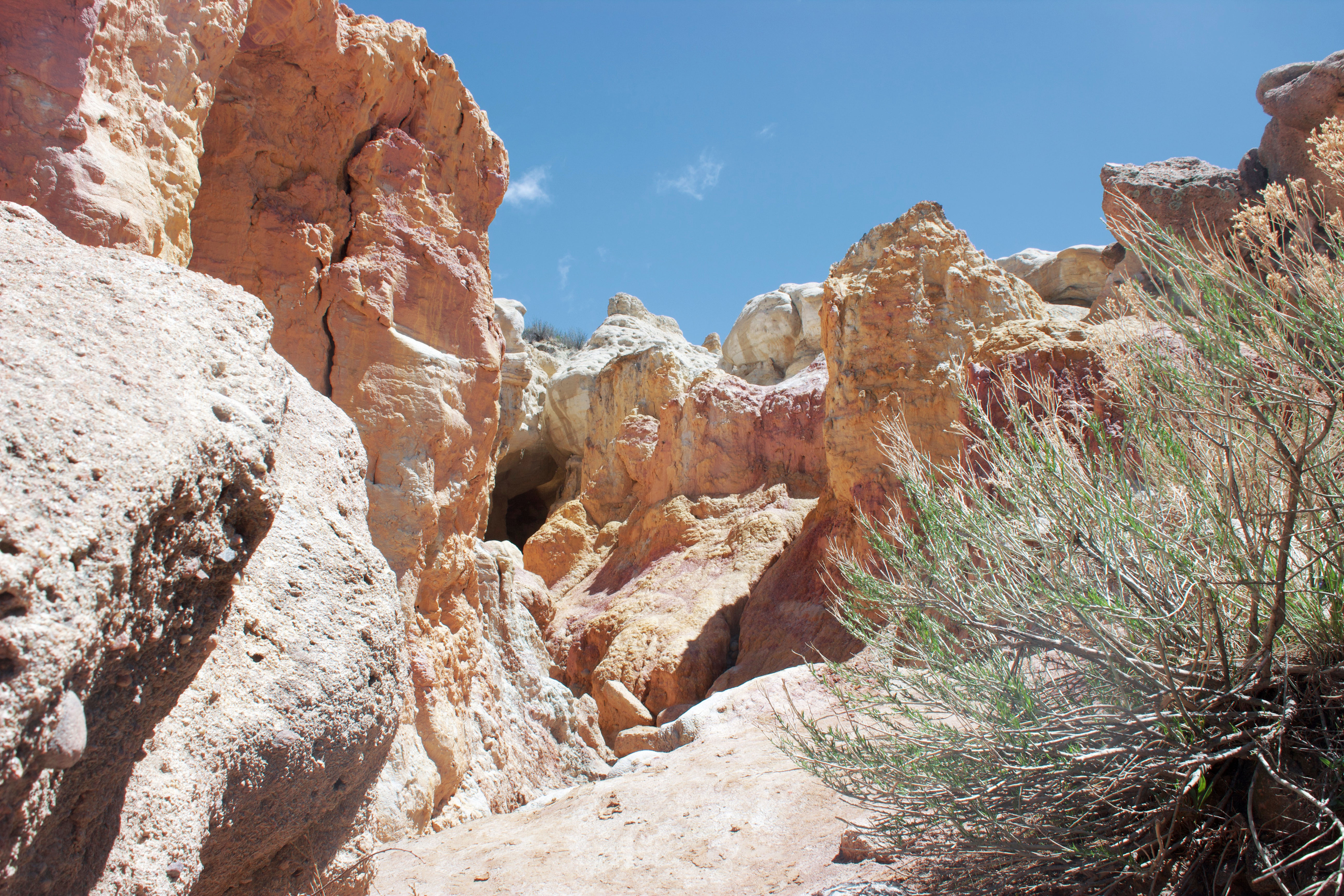
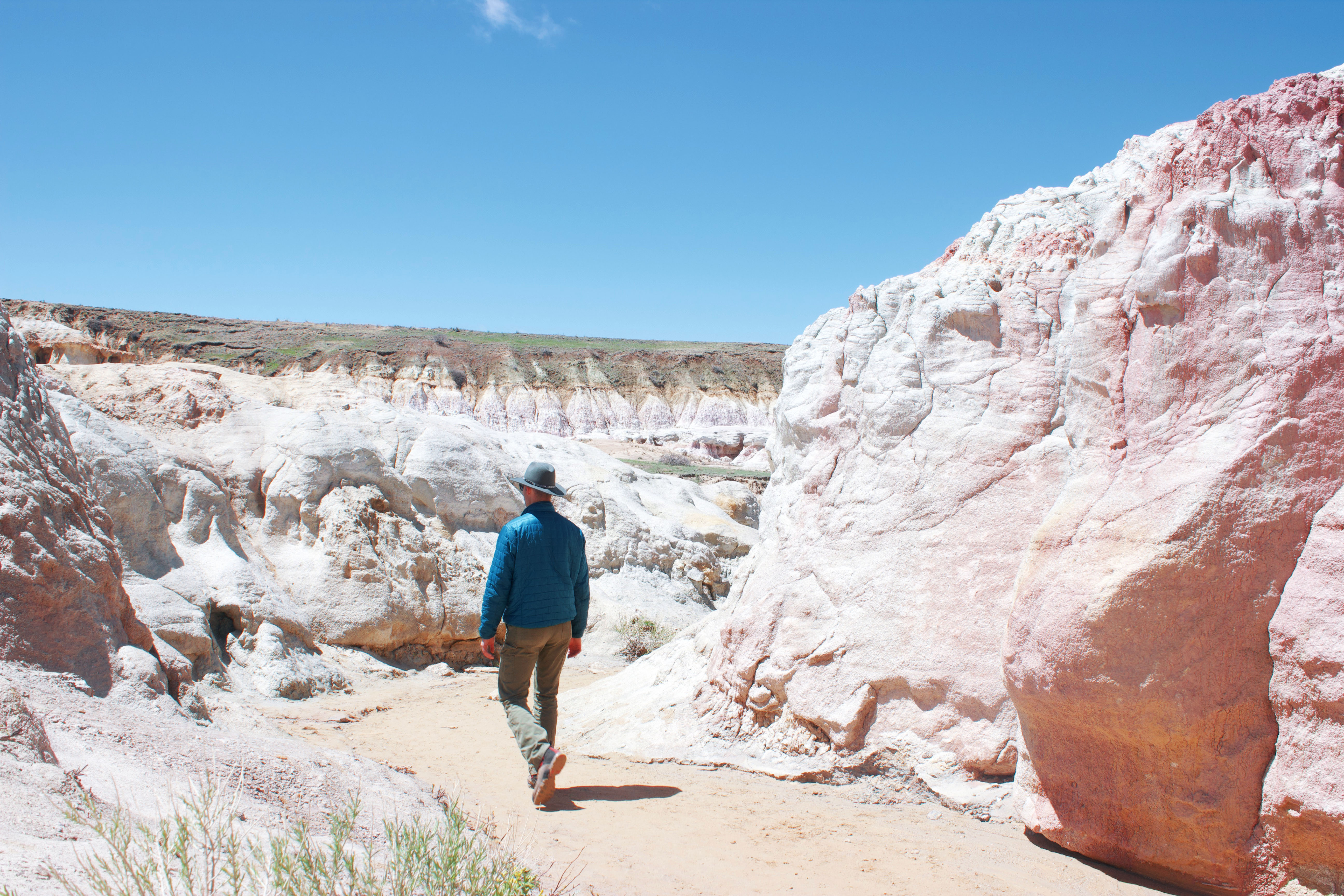
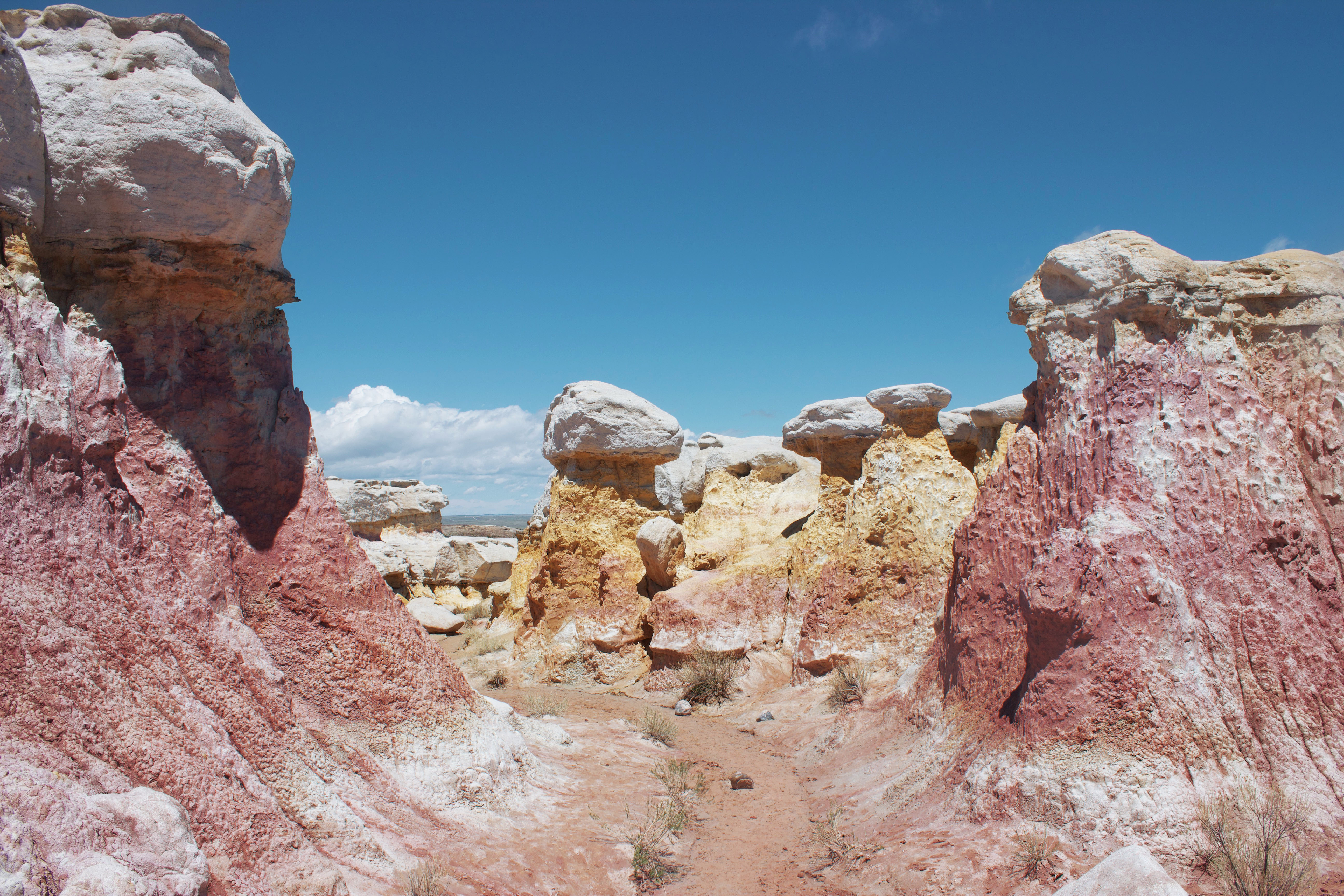
Paint Mines Interpretive Park is an underrated hiking area near Colorado Springs. It’s easy to see where the location got its name—the park is full of colorful clay deposits and rock formations. Wandering through the park feels like stepping onto another planet, and all of the trails here are beginner-friendly.
Zapata Falls Trail
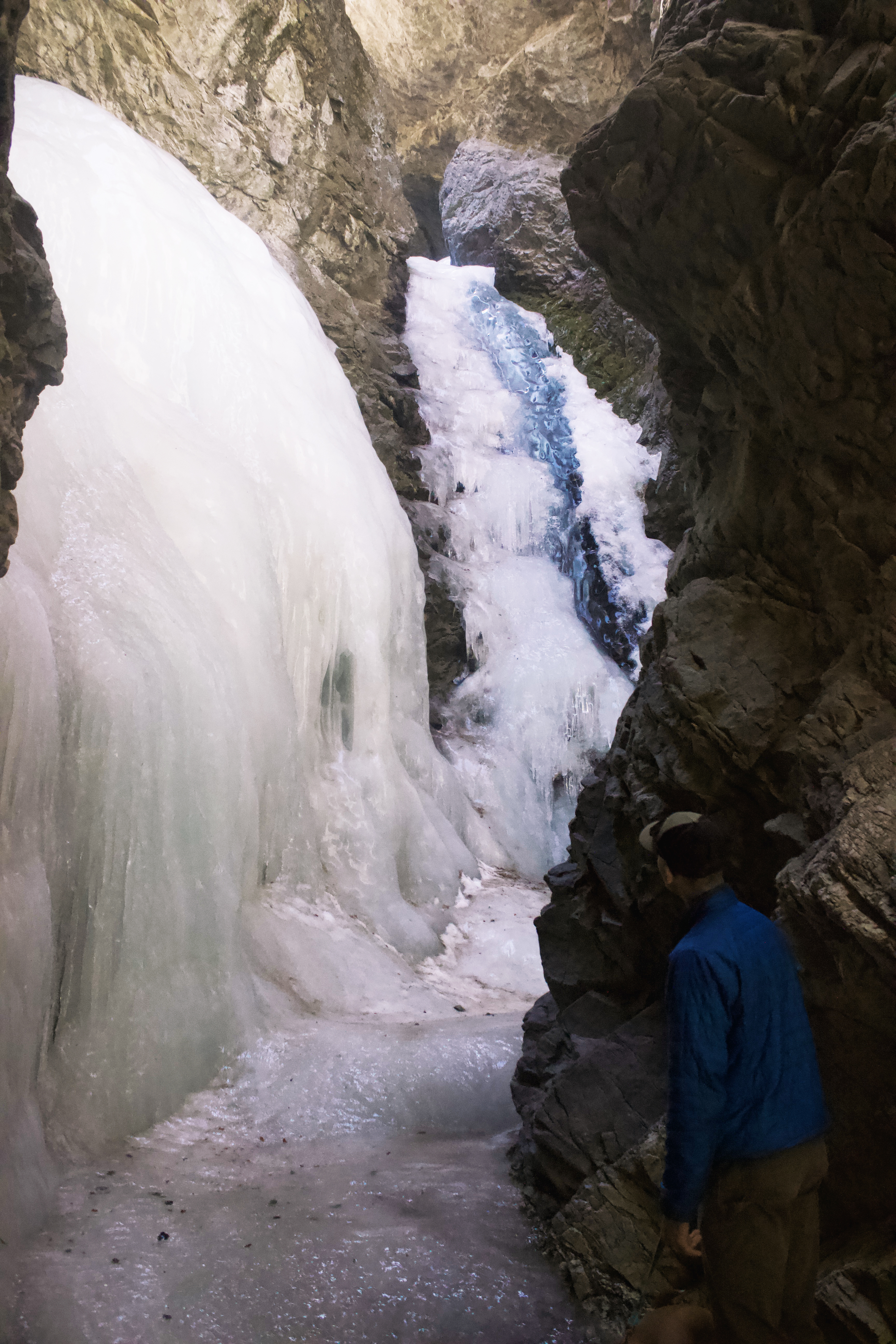
Just 20-30 minutes outside Great Sand Dunes National Park (another Colorado spot worth exploring) is Zapata Falls. The trail is easy and short, taking you to a partially hidden, 25-foot waterfall. In the winter, the falls freeze over, creating a magical icy wonderland.
Blue Lakes Trail
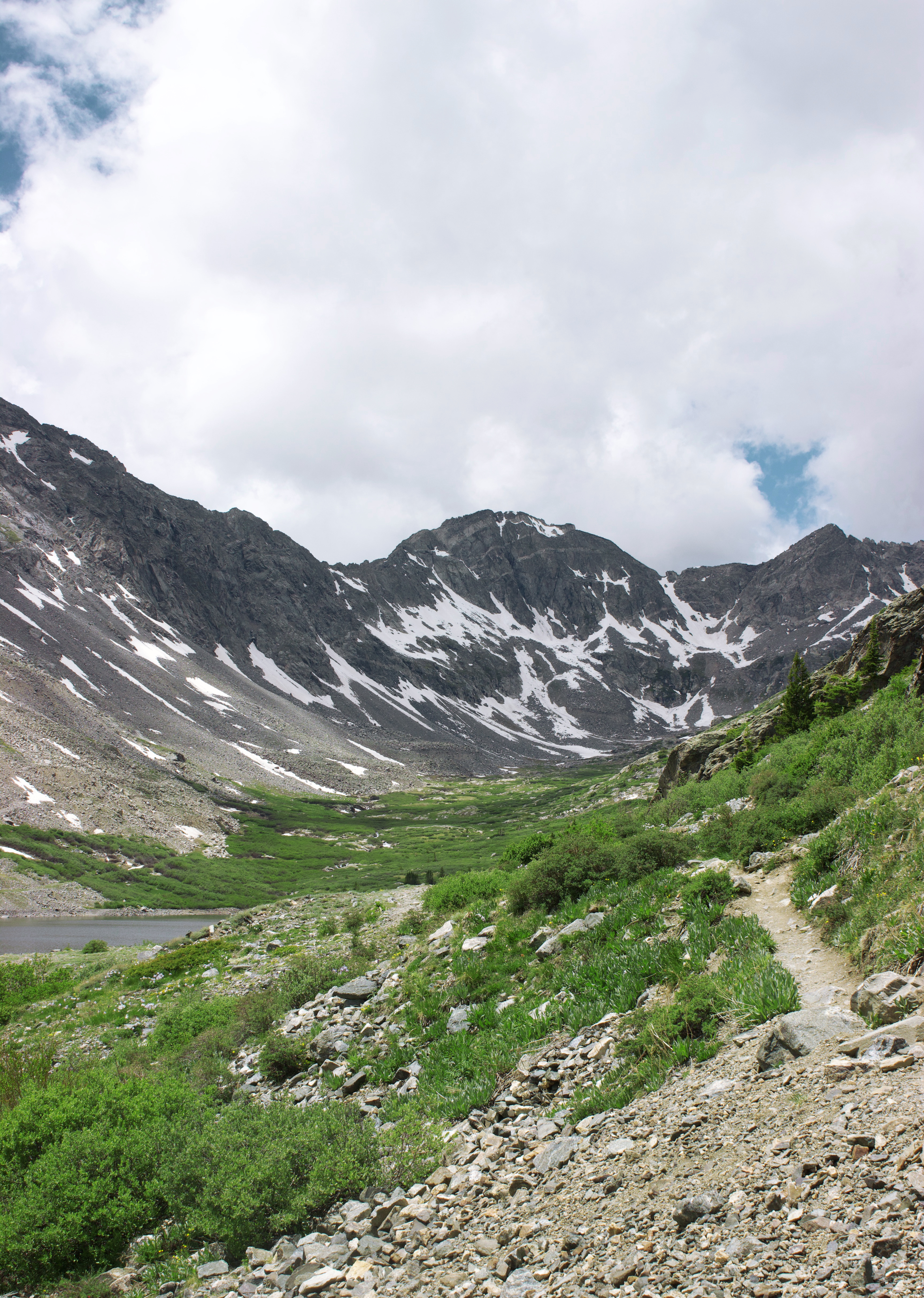
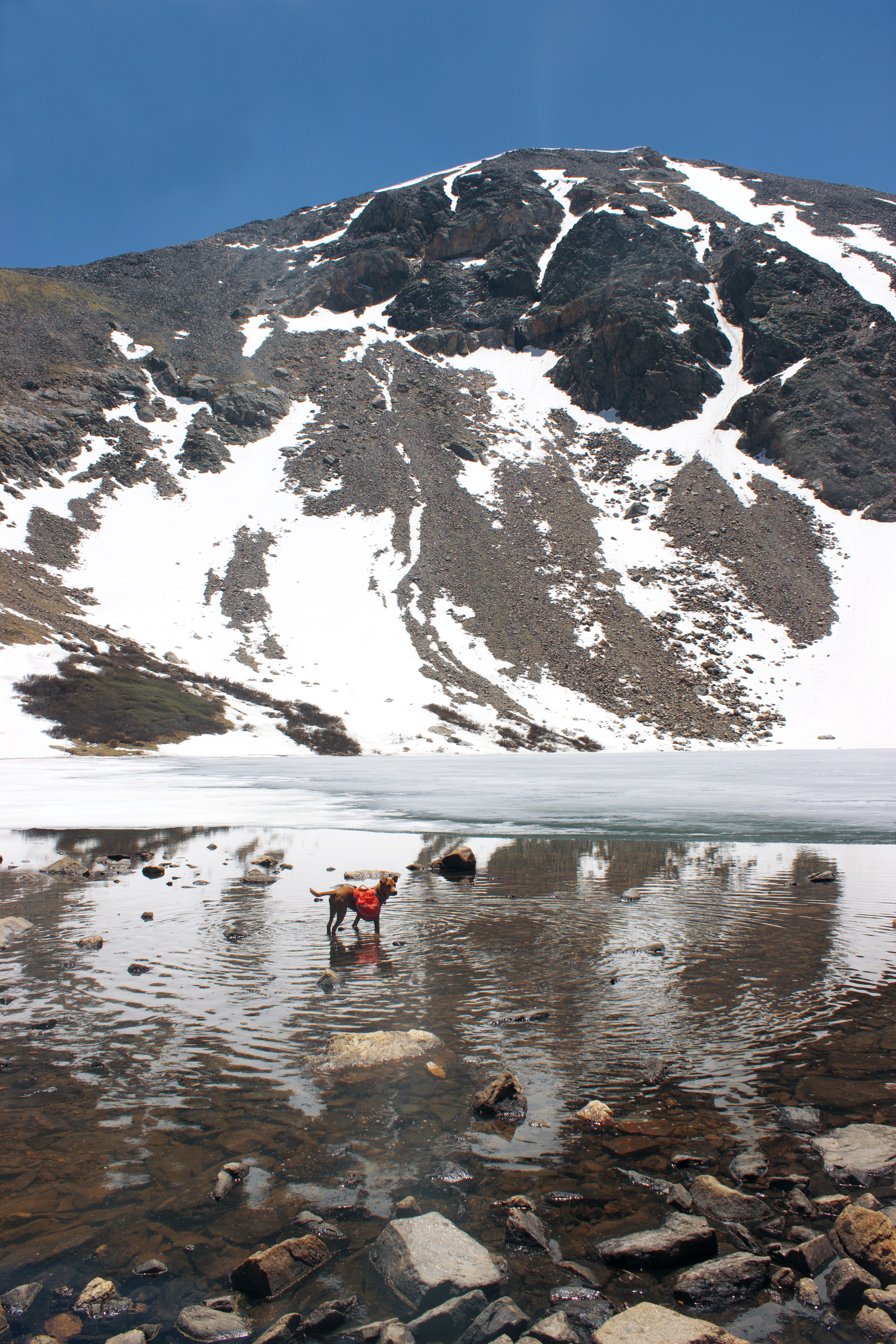
Blue Lakes Trail is an excellent option if you’re short on time or looking for a casual all-ages hike. This stunning outdoor area is located near Breckenridge, making it the ideal afternoon activity.
You’ll be blown way by the scenery, with serene lakes framed by jagged peaks. Watch for mountain goats in the parking lot and on the trail!
Perkins Central Garden Trail
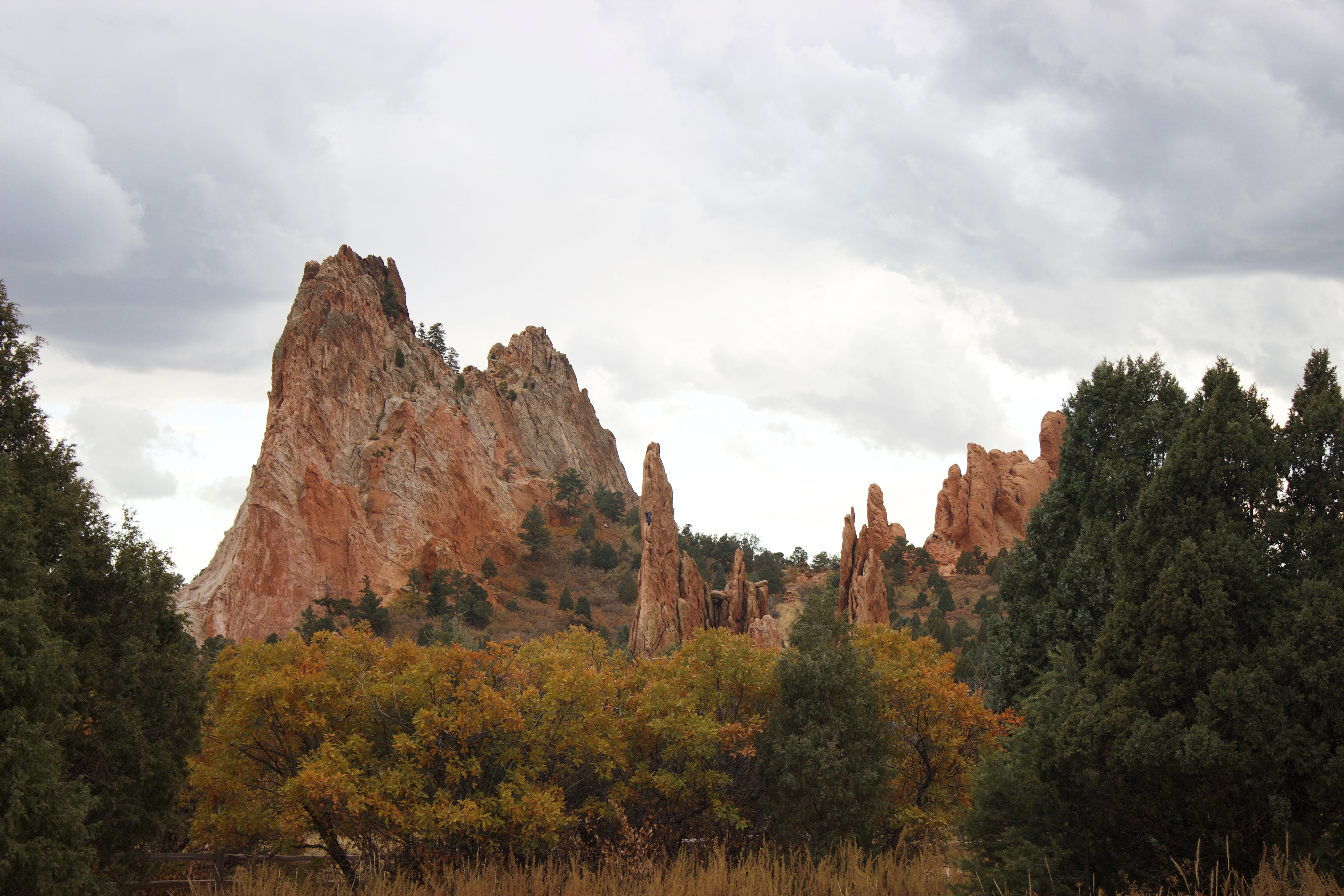
There are tons of hiking options in Garden of the Gods, but you can’t go wrong with the Perkins Central Garden Trail. This paved walking path takes you through picturesque meadows in the heart of the garden’s iconic formations. Garden of the Gods is beautiful any time of year and a must-visit when in Colorado Springs.
Rampart Reservoir via Rainbow Gulch Trail
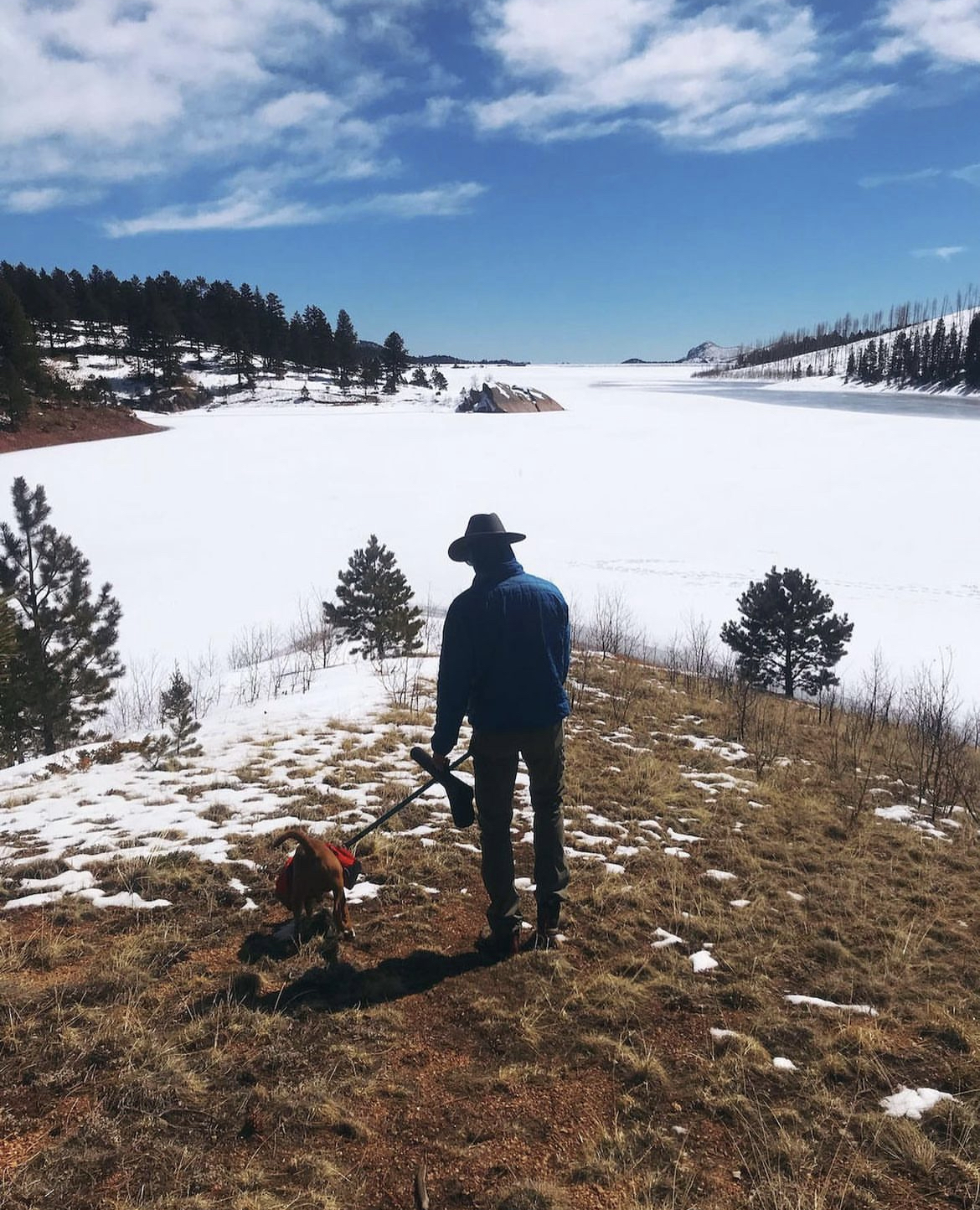
The Rainbow Gulch Trail is an easygoing hike that takes you to Rampart Reservoir, a popular outdoor spot for fishing and kayaking. Admire the striking landscape blanketed in snow during the winter, or visit in summer to see blooming flowers and watch fishermen casting lines to try their luck at snagging a fish.
Moderate
Lake Isabelle via Pawnee Pass Trail
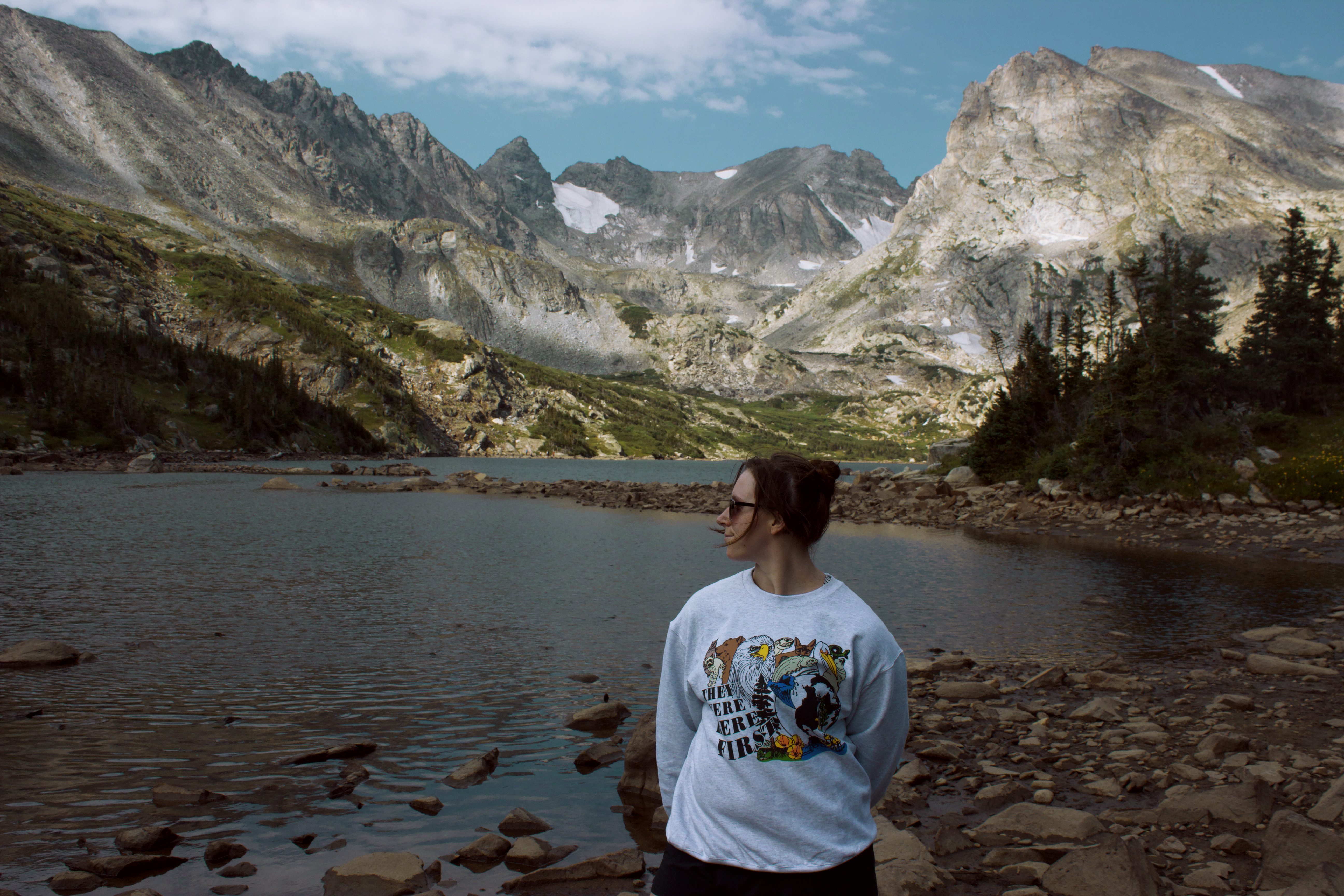
Lake Isabelle is one of my favorite hikes in Indian Peaks Wilderness. It has a little bit of everything, from lakes to wildflower fields, forests, waterfalls, and snow-capped mountains. If you’re lucky, you might see a moose along the way.
The Crags Trail
I highly recommend tackling the Crags Trail in fall to see the golden aspens. There are some steep sections at the beginning and end of the hike, but it’s overall fairly moderate. The aspen groves, rock formations, and sweeping views make this hike 100% worth the effort.
Crater Lake (Maroon Bells)
You’ve probably seen photos of the Maroon Bells even if you didn’t realize it. These iconic peaks are incredibly popular among photographers and nature enthusiasts.
The hike to Crater Lake is less than four miles with a couple hundred feet of elevation gain, making it appropriate for hikers of all experience levels. Seeing Crater Lake with the Maroon Bells in the background is insanely beautiful, and pictures truly don’t do it justice.
Loch Lomond Trail
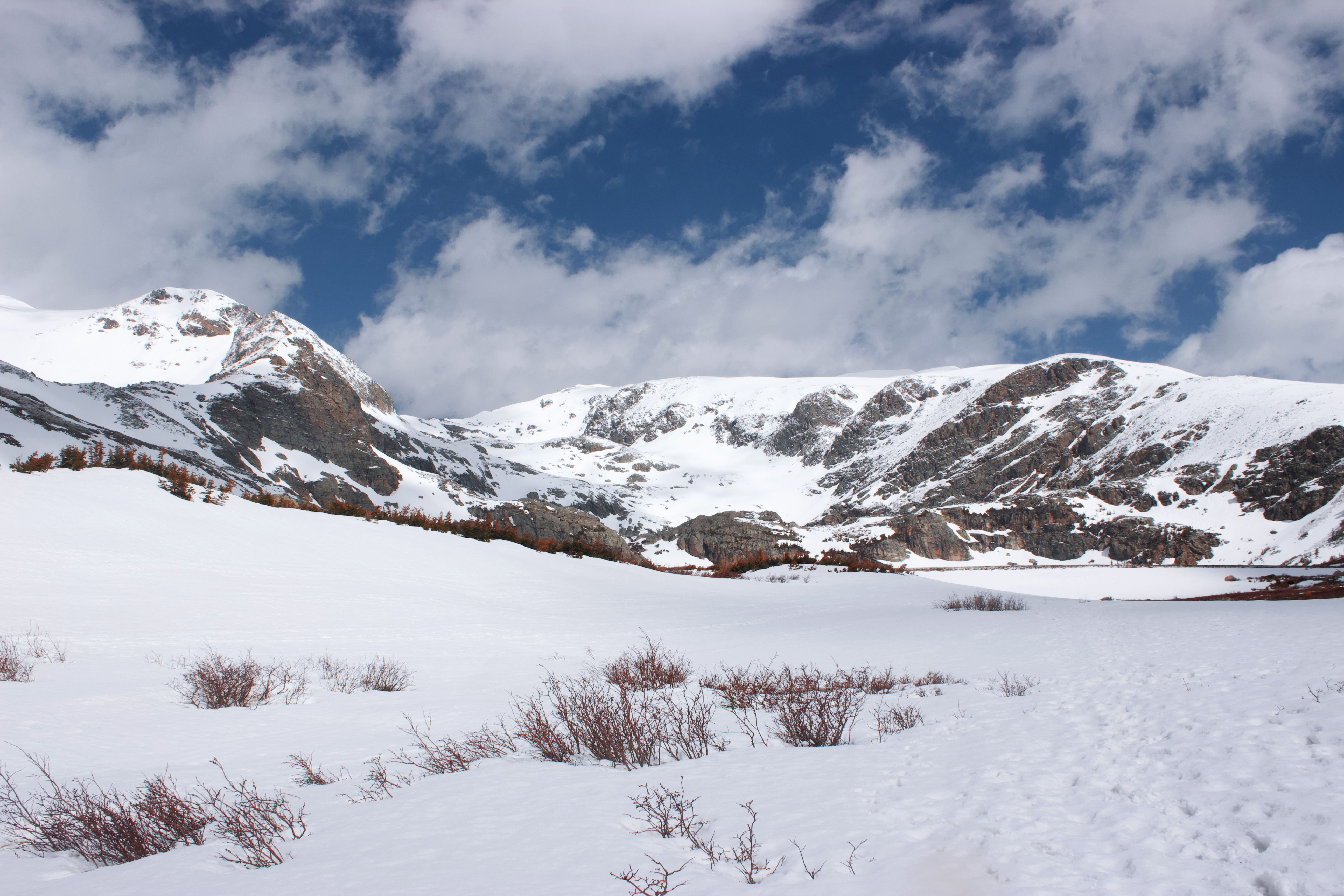
Loch Lomond is a short but somewhat challenging hike near Empire. The trail is technically a 4×4 road you can drive on, but hiking is much more fun (in my opinion). I didn’t get to see the lake in summer while living in Colorado, but it was an unforgettable winter adventure.
Rogers Pass
Rogers Pass is far less popular than other hikes in the Winter Park area but is just as beautiful. It provides the perfect amount of challenge for beginners and is a fantastic introduction to the Colorado mountains. From the old train trestle to the aspens and scenic overlooks, there’s a lot to love about this underrated trail.
Diamond Lake Trail
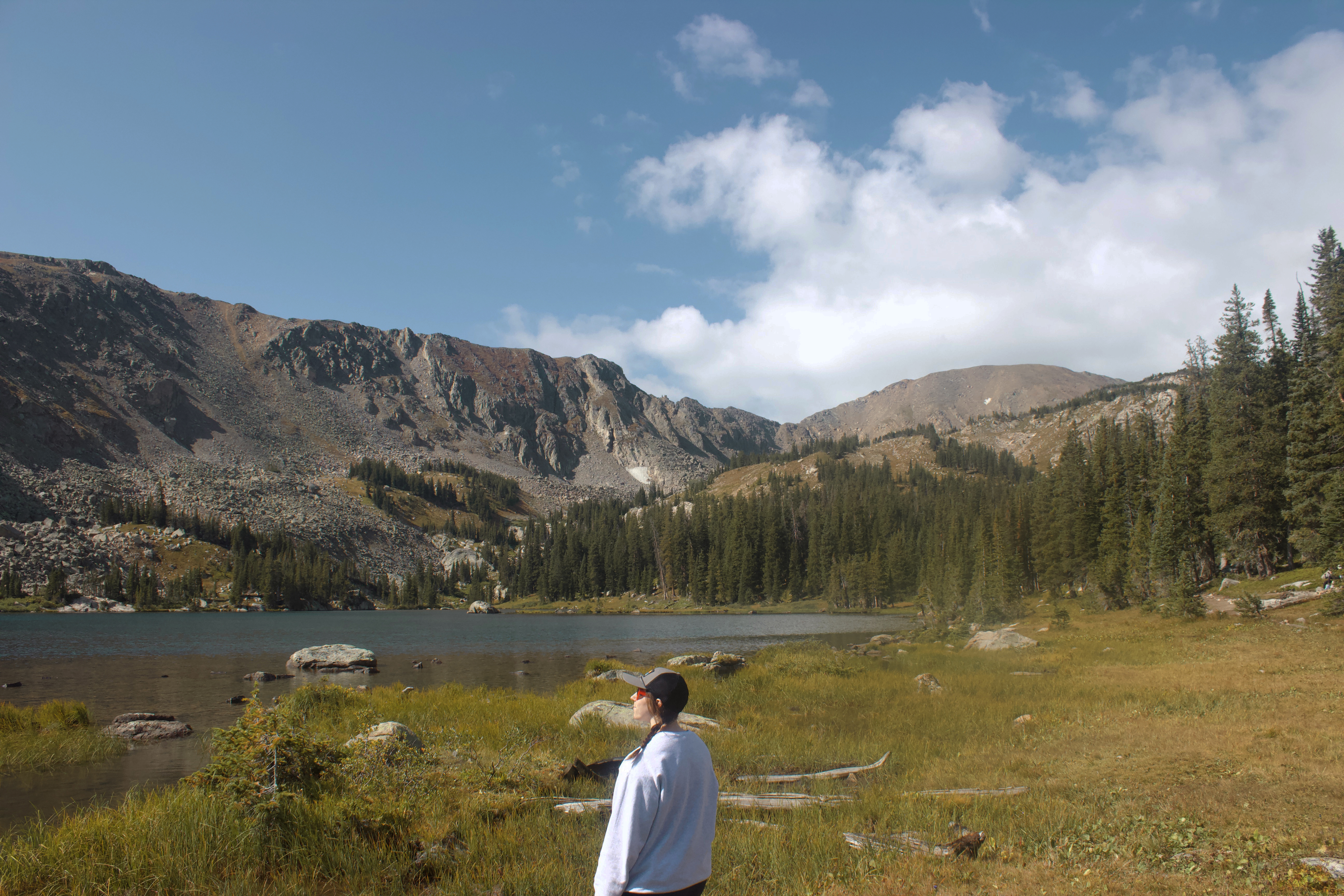
Diamond Lake is another classic Indian Peaks Wilderness trail. The hike gains over 1,000′ of elevation, so it’s definitely a good workout. Diamond Lake itself is picture-perfect, with lots of room to spread out and explore.
Bluebell, Royal Arch, Flatiron, Bluebell-Baird, and Meadow Trail Loop
Get up close and personal to Boulder’s famous Flatirons on the Bluebell, Royal Arch, Flatiron, Bluebell-Baird, and Meadow Trail Loop (try saying that five times fast). Don’t underestimate this under-2.5-mile-long hike—there’s enough elevation gain to make you break a sweat. Along the way, you’ll enjoy beautiful views of the distinctive rock formations, downtown Boulder, and the surrounding mountains.
Dream Lake Trail
If you only have time for one hike in Rocky Mountains National Park, make it the Dream Lake Trail. This is my go-to when hosting friends and family who want to do some hiking in the park. I’ve only experienced it in winter (which is gorgeous and dramatic), but it’s a great option any time of the year.
Mayflower Gulch Grand Traverse
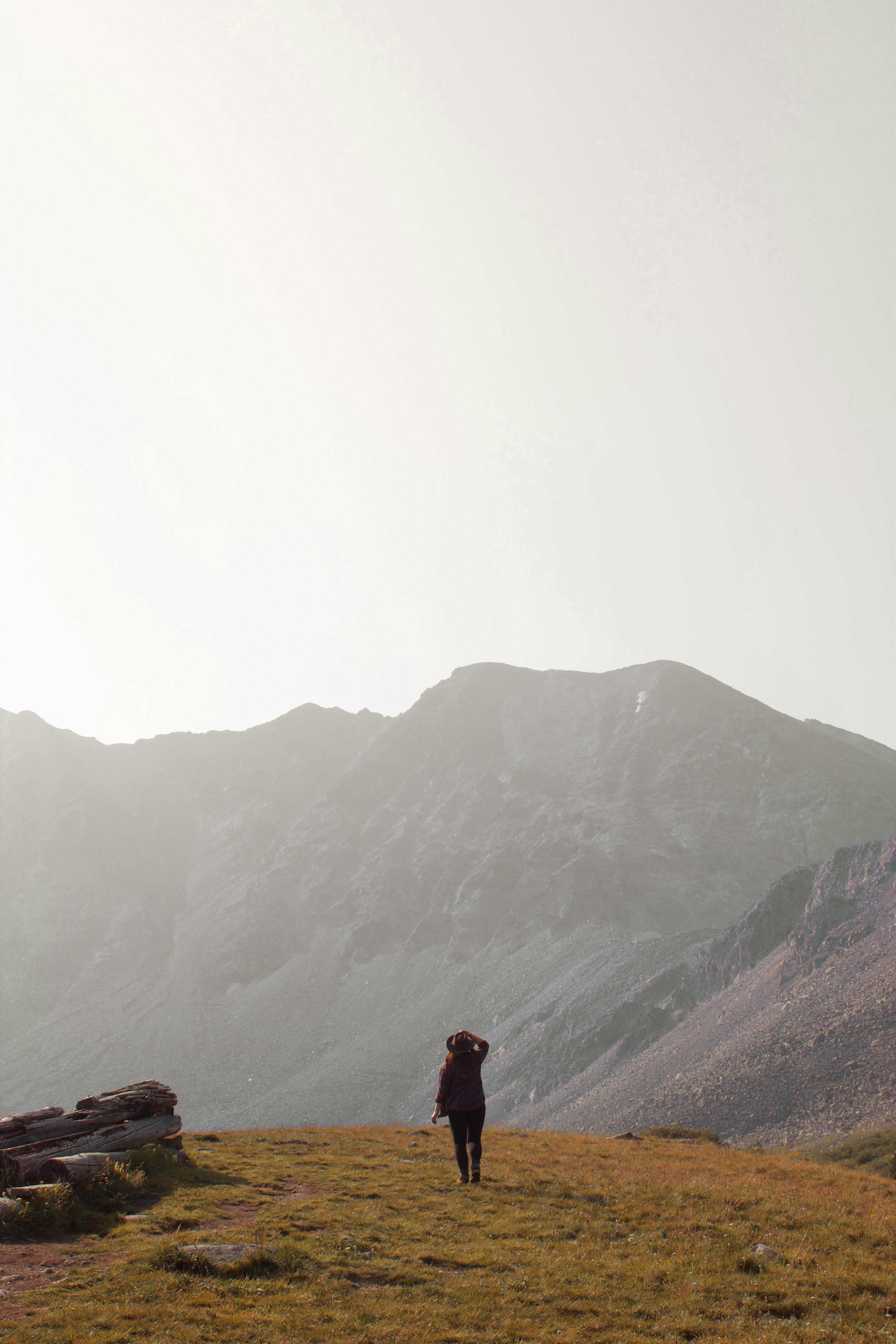
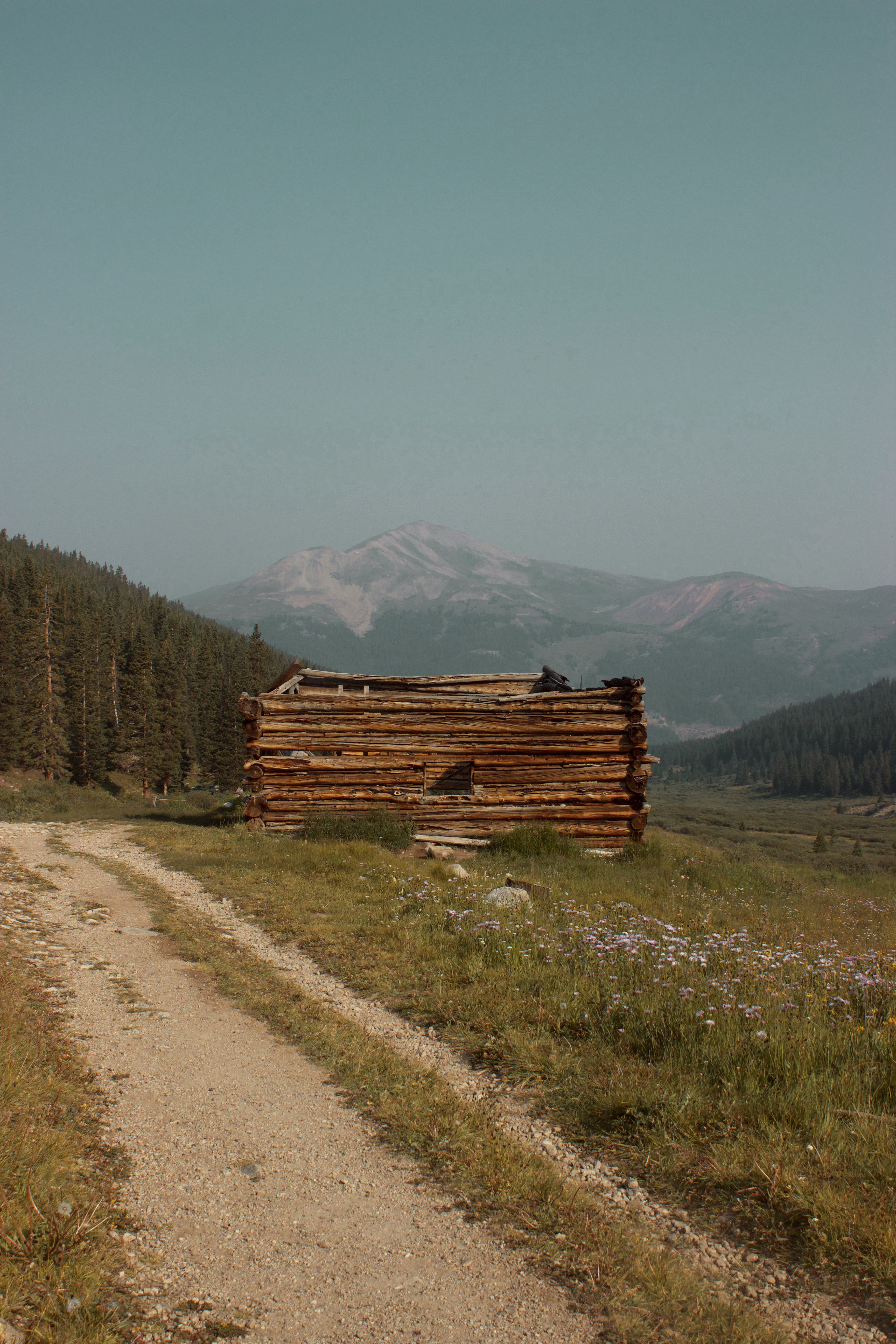
Discover an abandoned mine tucked among the mountains along the Mayflower Gulch Grand Traverse. The trail follows an old wagon road to a historic mining site, and you can add mileage by hiking around what remains of the log cabins and wooden structures. Summer is an excellent time to hike Mayflower Gulch because all the flowers will be in bloom.
Mule Creek Trail
Mule Creek Trail is a must when visiting Woodland Park. It follows the creek along seven miles of forests and canyons, making you feel like a rugged wilderness explorer. This hike is moderately challenging if you tackle the entire route, but you can always shorten it for a less intense adventure.
Devil’s Head Lookout
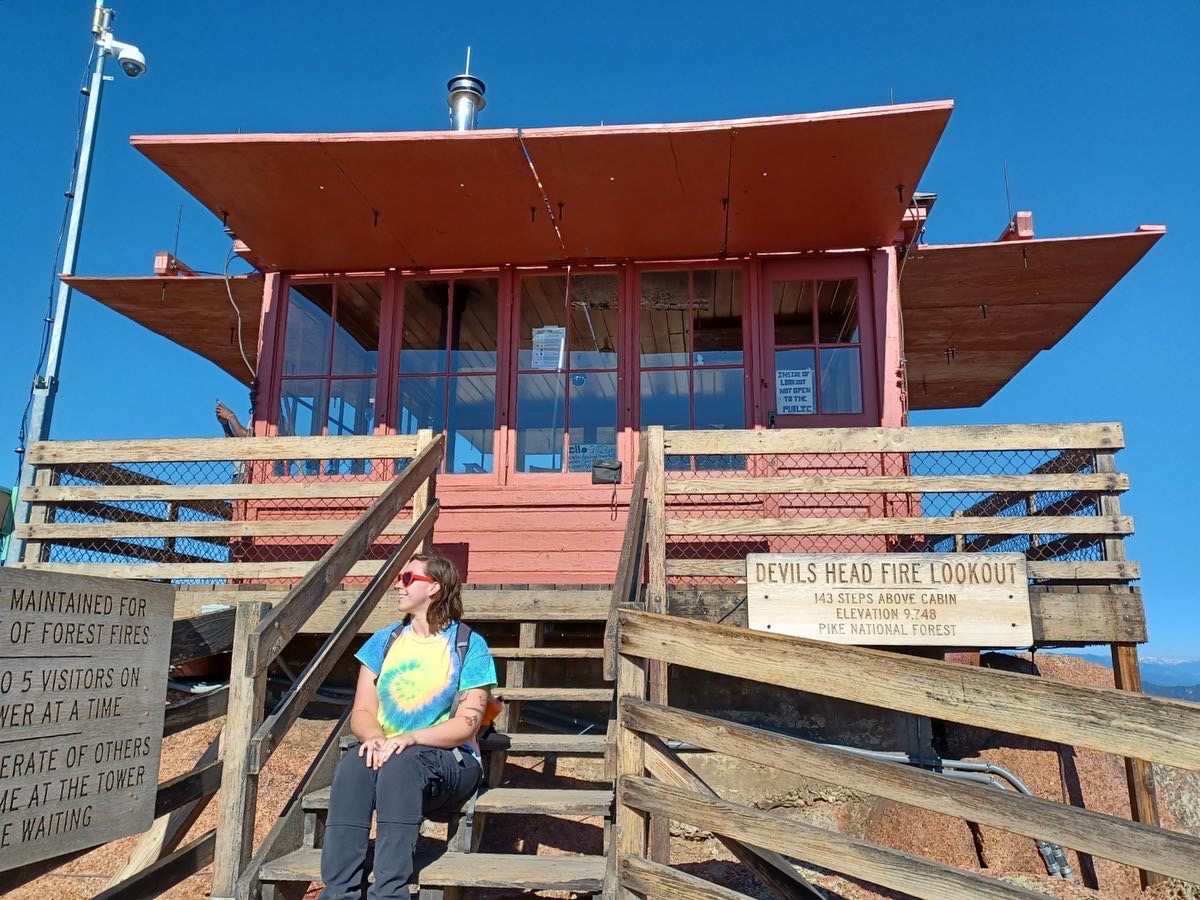
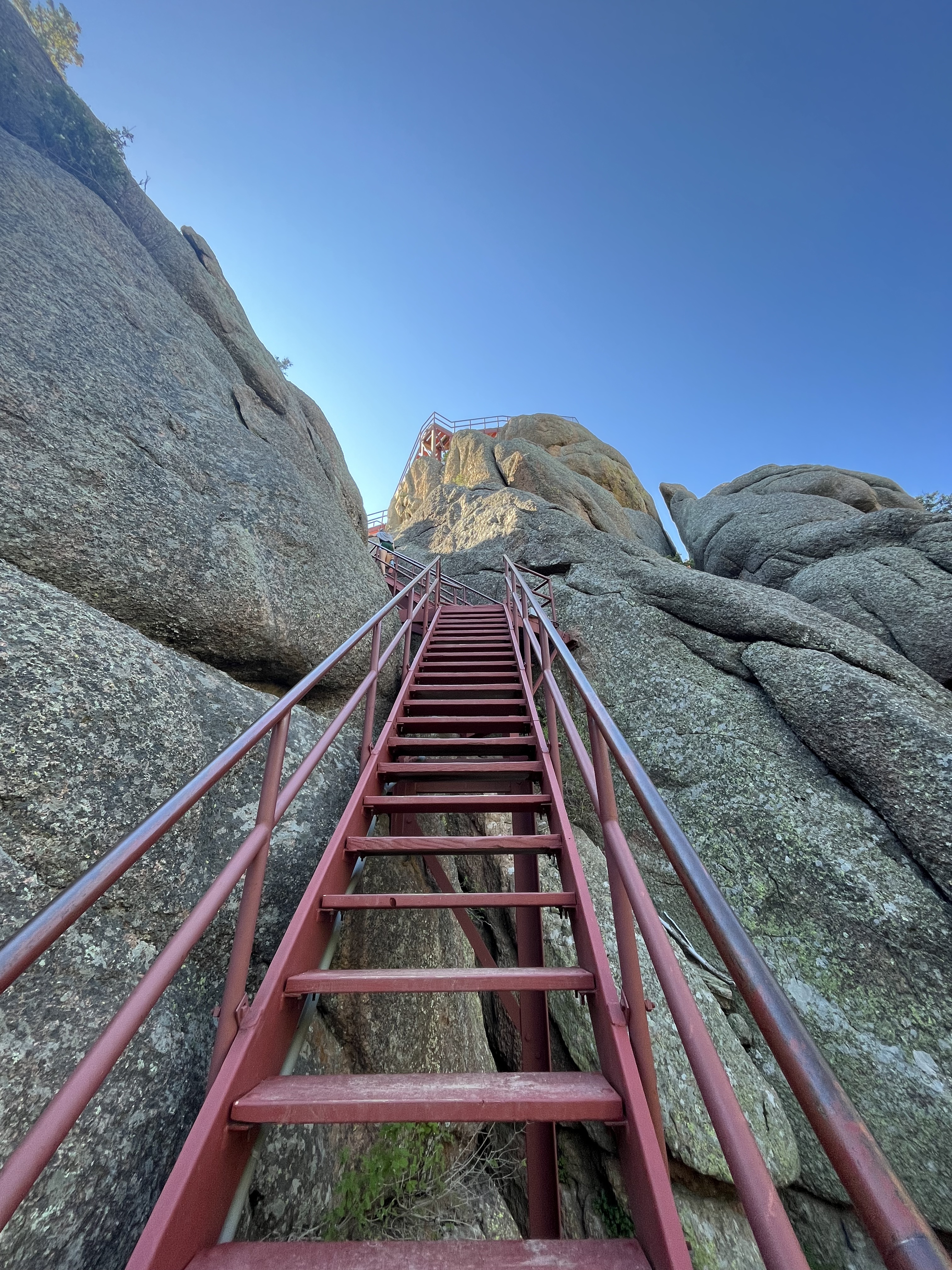
I love every step of the trail to Devil’s Head Lookout, a picturesque fire tower in Pike National Forest. The tower is staffed by forest rangers, and it’s fascinating to see where they work and live while on duty. Devil’s Head Lookout is less than three miles roundtrip but steadily gains elevation, with an intense final push up a set of stairs leading to the tower.
Silver Dollar Lake and Murray Lake Trail
See two stunning alpines lakes along the Silver Dollar and Murray Lake Trail. This was one of the first hikes I ever stepped foot on in Colorado, so it holds a special place in my heart.
You’ll travel through a forest before ascending above the tree-line, eventually arriving at Silver Dollar Lake. Continue up and over a saddleback to see Murray Lake, which is equally beautiful.
Challenging
Mount Democrat via Kite Lake Trail
Mount Democrat is one of four 14ers that make up the DeCaLiBron, an intense loop that summits multiple peaks in one strenuous hike. While Mount Democrat is relatively moderate compared to other Colorado 14ers, it isn’t easy by any stretch of the imagination. Regardless if you do the entire DeCaLiBron or turn back after the summit of Democrat, you’re in for a stunning high-altitude adventure.
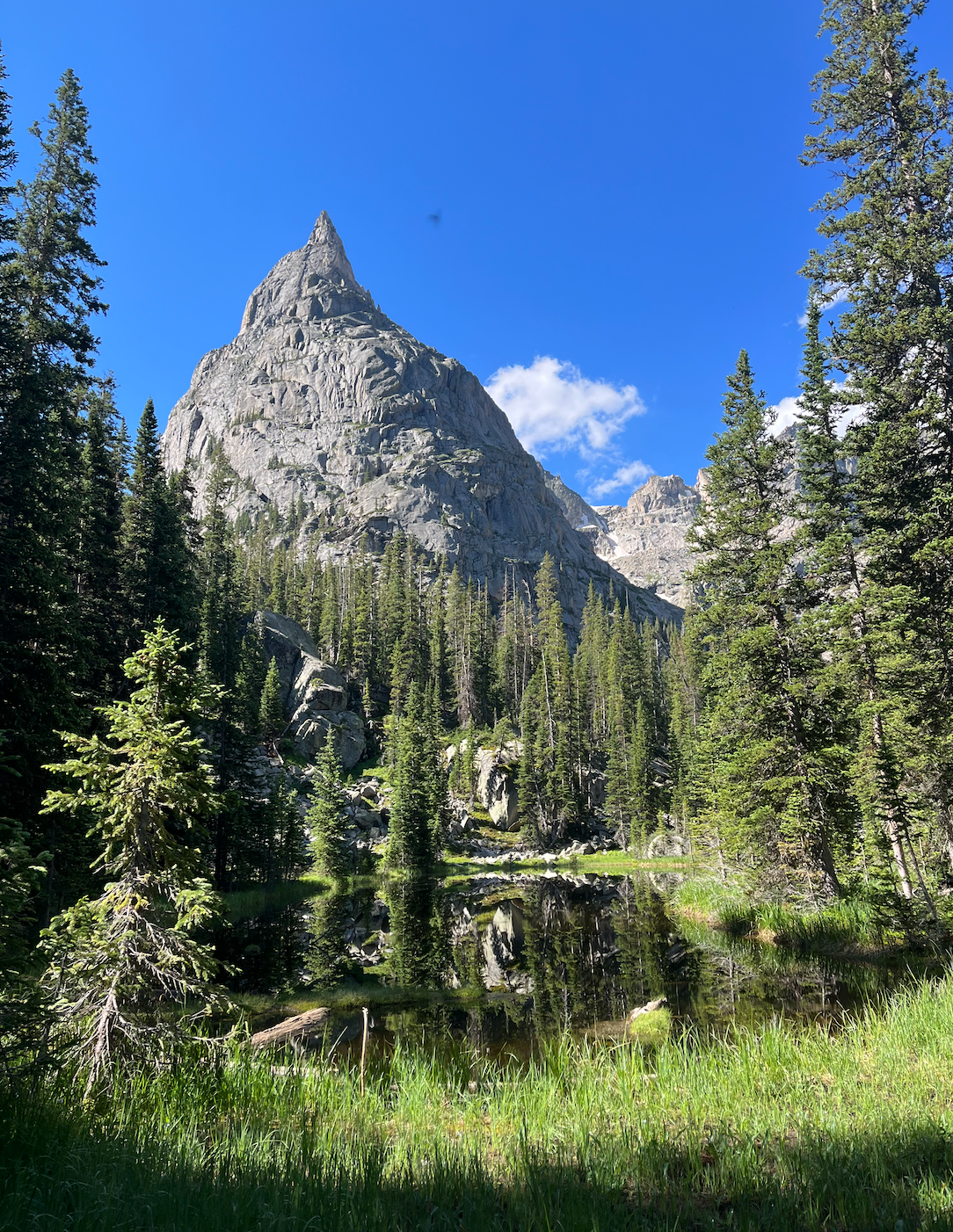
Crater Lake and Lone Eagle from Long Lake Trailhead (Indian Peaks Wilderness)
The trail to Crater Lake and Lone Eagle in Indian Peaks Wilderness might be my all-time favorite Colorado hike. It’s around 15 miles to Crater Lake and Lone Eagle from the Monarch Lake Trailhead, so many camp overnight to tackle it over two days.
My husband, dog, and I hiked the entire route in one day, which was very challenging and exhausting. However, the views of Mirror and Crater Lakes and Lone Eagle Peak were absolutely breathtaking and made every step feel worthwhile.
Mount Blue Sky (formerly Mount Evans) via Summit Lake
Mount Blue Sky is a popular pick among hikers eager to summit their first Colorado 14er because it’s an easily accessible and fairly short trail. It gains around 2,000′ of elevation over 5.5 miles, which is pretty doable if you’re up for the challenge.
Some portions of the hike are steep, but I found the rocks leading up the final stretch to the summit to be the hardest part. You have to watch where you’re walking and step carefully to avoid going off trail or slipping.
Mount Bierstadt Trail
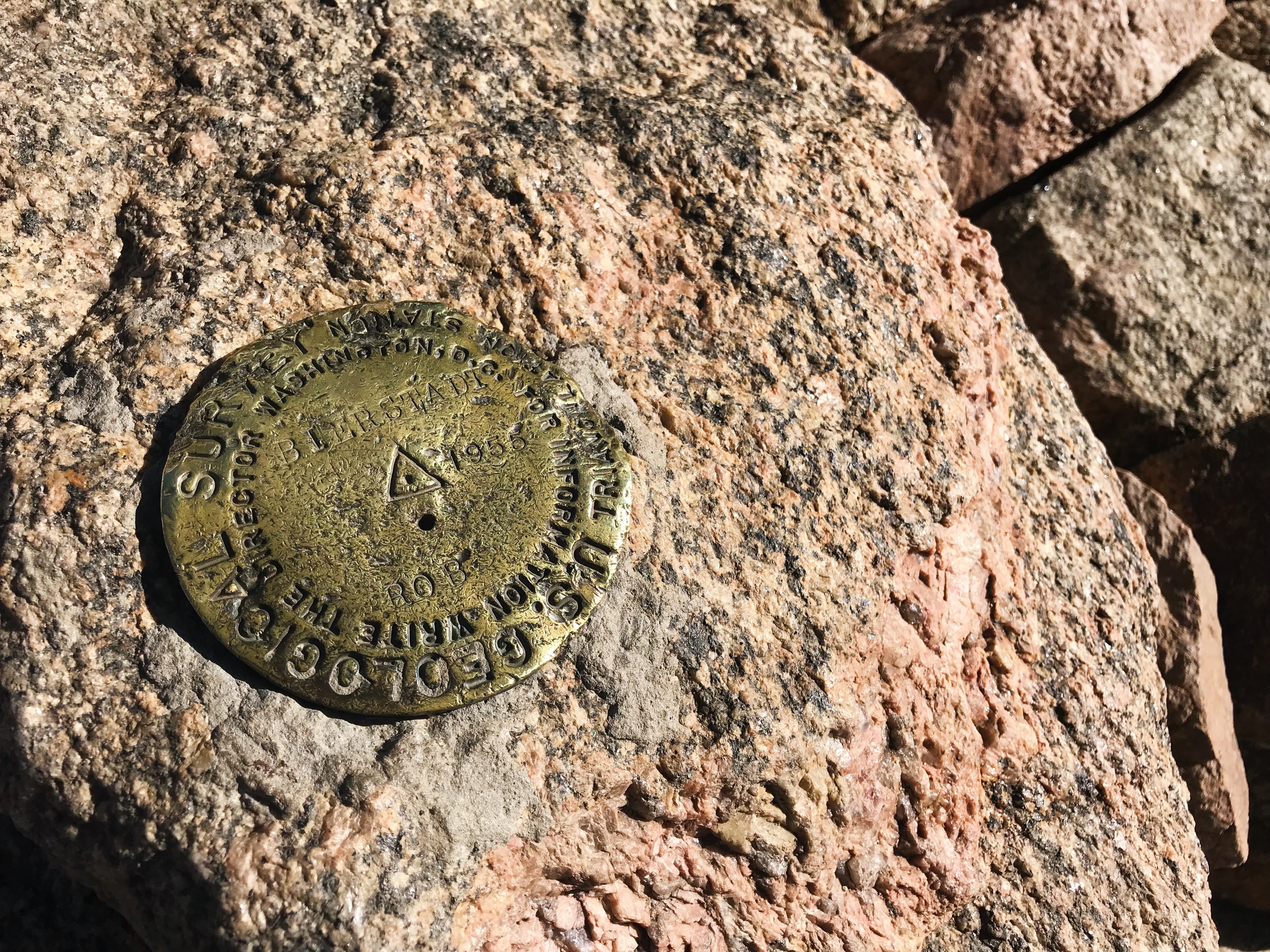
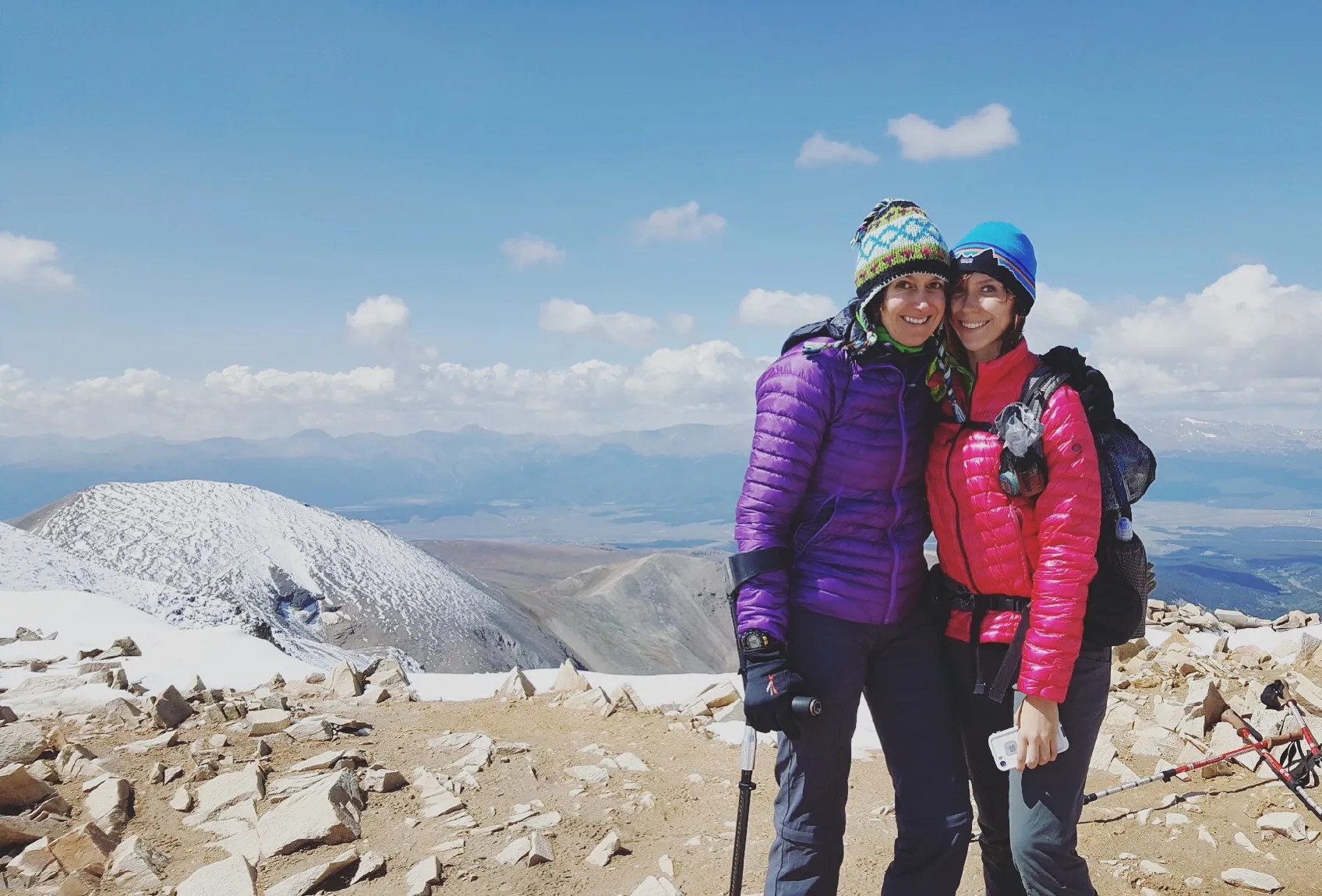
Mount Bierstadt is the first 14er I ever attempted in Colorado. Spoiler alert: I didn’t successfully summit it the first time due to weather. Thankfully, I got to return a few years later and finish the hike with my husband!
This peak is another top choice for those interested in hiking their first 14er, as you’ll gradually ascend Mount Bierstadt over roughly seven miles. Mountain goats and moose are frequently spotted along the trail, adding to its appeal.
Barr Trail
Summiting Pikes Peak via the Barr Trail is one of the most difficult hikes I’ve tackled in my lifetime. The route is over 12 miles one-way and almost entirely uphill, gaining around 7,300′ of elevation. It’s an incredibly intense yet fulfilling experience, giving you a new appreciation for America’s Mountain.
Mount Sherman Trail via Four Mile Creek Road
Last but certainly not least is the Mount Sherman Trail via Four Mile Creek Road—my first successful 14er! The roughly 5-mile route winds through some abandoned mining structures before turning into a rocky stretch of terrain leading to the summit. Mount Sherman isn’t for the faint of heart, but it’s pretty straightforward and less technical than many other 14ers throughout Colorado.
What are your favorite hikes in Colorado? I’m already missing this beautiful state and will definitely return for more hiking adventures in the future!



















































 Wandering the Gap